
Pruning
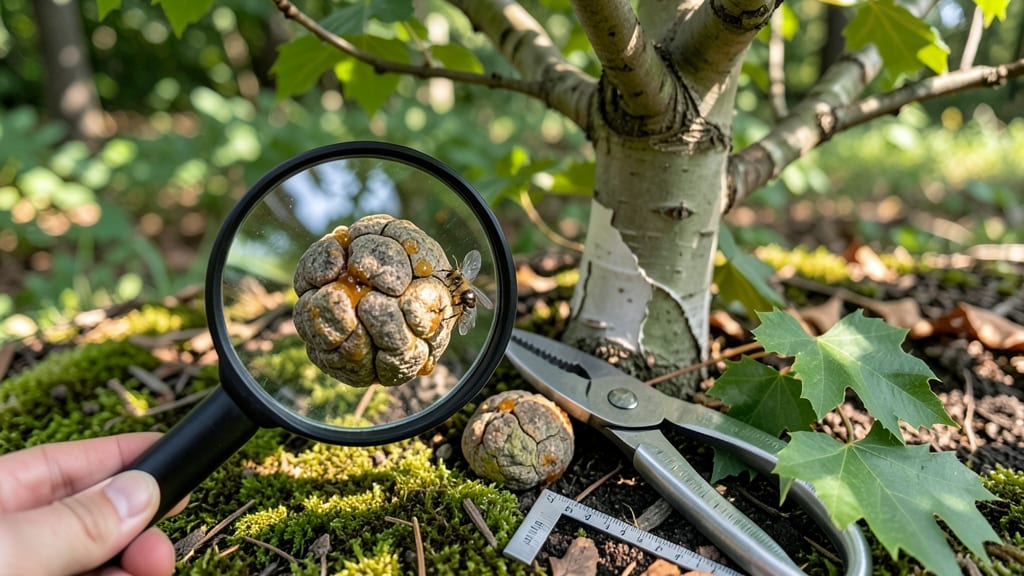
Maple tree galls are those weird, swollen growths that look like tumors on branches—turns out, they’re usually caused by gall wasps or fungus, not disease. 🌳 I’ve seen them turn a healthy maple into a mess of weak branches, so I learned the right way to remove them without hurting the tree.
The good news? Most galls don’t kill maples, but they can spread if left alone. Gall wasps lay eggs in the bark, triggering plant cells to grow around them, while fungal galls form from spores in wounds.
Pruning the right way—cutting 6 inches below the gall—stops the spread without stressing the tree.
You’ll need clean pruning shears, rubbing alcohol to sterilize them, and a sharp eye for healthy growth. After removal, seal small cuts with pruning sealant to prevent fungal infections. The tree will heal, and new growth will fill in within a season.
This works for both small galls and larger clusters, whether on young saplings or mature trees. The key is timing—prune in late winter or early spring when the tree is dormant. Let’s get those branches looking healthy again!
Root Causes of Tree Growth Abnormalities
When your maple tree starts developing those unsightly, lumpy growths—often called maple tree galls—it’s usually a sign that something has disrupted its normal growth cycle. These abnormal formations aren’t just cosmetic; they’re a biological response to external stressors.
Understanding the why behind them is the first step to preventing their spread and protecting your tree’s health. Let’s break down the key culprits and their scientific mechanisms.
Most maple tree galls are triggered by tiny, often microscopic, insects like maple gall midges (family Cecidomyiidae) or maple gall wasps. These insects lay their eggs in the tree’s tender tissues—often on buds, stems, or leaves—where the larvae then hatch and feed.
Their saliva contains chemicals that stimulate the tree’s cells to multiply rapidly, forming a protective gall around the larvae. Think of it like a natural nursery: the gall provides shelter, food, and moisture while the insect develops.
How it works:
- Egg-laying: Adult insects inject eggs into young maple tissue (buds, shoots, or leaf veins).
- Chemical trigger: Larvae secrete growth-regulating hormones (like auxins and gibberellins), forcing plant cells to divide uncontrollably.
- Gall formation: The tree’s immune system reacts by encapsulating the larvae in a hard, woody or fleshy gall.
- Larval development: The gall matures into a safe haven where the insect pupates and eventually emerges as an adult.
Actionable insight: Galls caused by insects are usually harmless to the tree’s long-term health, but severe infestations can weaken branches. If you spot pimple-like bumps on buds or swollen leaf veins, the culprit is likely an insect.
Not all galls are insect-driven—some are caused by pathogenic fungi or bacteria that infect wounds, weak points, or even healthy tissue. These microbes release enzymes that break down cell walls, prompting the tree to overproduce tissue as a defensive response.
The result? Hard, often spongy galls that can ooze sap, crack open, or even rot internally.
Common fungal/bacterial triggers:
| Pathogen | Symptoms | Risk Level |
|---|---|---|
| Taphrina caerulescens (Peach Leaf Curl fungus) | Thick, warty galls on leaves; distorted growth | Moderate (can defoliate if severe) |
| Agrobacterium tumefaciens | Crown galls (root/shoot swellings); sticky exudate | High (spreads via pruning tools, soil) |
| Nectria spp. (Canker fungi) | Sunken, crusty galls with oozing sap; dead bark | Critical (can kill branches or the tree) |
How to tell the difference: Insect galls are usually smooth, rounded, and appear in clusters. Fungal/bacterial galls often have:
- Cracked or oozing surfaces
- Unusual colors (orange, black, or moldy spots)
- Sap or fungal spores near the gall
Pro tip: 🌡️ If the gall feels warm or mushy when touched, it’s likely fungal. Act fast—these spread via spores or contaminated tools.
Sometimes, galls form as a last-resort survival mechanism when a tree is under stress. Environmental factors like extreme heat, drought, or poor soil weaken the tree’s defenses, making it more susceptible to abnormal growth.
Even mechanical damage (e.g., from hail, lawnmowers, or improper pruning) can trigger gall-like reactions as the tree attempts to "patch" wounds.
Key stress triggers:
- Nutrient deficiency: Low nitrogen or phosphorus forces the tree to redirect energy, sometimes resulting in lumpy, malformed growth.
- Compacted soil: Restricted root growth leads to crown galls or stunted shoots.
- Sudden temperature shifts: Frost cracks or sun scald can create entry points for secondary infections.
- Pollution or herbicide drift: Chemical stress can mimic insect damage, prompting gall formation.
Visual clues: Stress-related galls often appear:
- On young, flexible branches (not just buds/leaves)
- In patterns along the branch (e.g., rings or spirals)
- Accompanied by yellowing leaves or stunted growth
Prevention tip: ✨ Maintain tree health with mulching, deep watering, and balanced fertilizer. Healthy trees resist gall formation better!
Now that you know why those galls appear, the next step is identifying which type you’re dealing with—and how to remove or treat them safely. Stay tuned for our pruning guide to stop fungal spread!
Fixing Maple Tree Growths Naturally
Maple tree galls—those unsightly, often fungal or insect-induced bumps—can weaken your tree if left unchecked. The good news? Most cases respond well to targeted care. Below, we’ve mapped common causes to practical fixes, plus prevention tips to keep your tree thriving.
Fungal galls (often caused by Taphrina or Nectria) appear as swollen, discolored growths on branches or leaves. Here’s how to tackle them:
🔪 Step 1: Prune Infected Areas
- When: Late winter or early spring (before buds swell).
- How:
- Use sterilized pruning shears (wipe with rubbing alcohol between cuts).
- Cut 6–12 inches below the gall to remove infected tissue.
- Seal cuts with pruning sealant (optional but reduces entry points for pests).
- ⚠️ Warning: Avoid pruning during wet weather to prevent fungal spread.
🌡️ Step 2: Apply Fungicide
- Best options:
- Copper fungicide (organic, effective against Taphrina).
- Neem oil spray (prevents spore germination; reapply every 2 weeks).
- How to apply:
- Spray infected areas and surrounding foliage thoroughly.
- Follow label instructions for timing (e.g., avoid spraying in direct sun).
💡 Pro Tip:
Fungal galls often recur if humidity is high. Improve airflow by thinning dense branches and watering at the base (not overhead).
Galls caused by mites, aphids, or wasps (like Andricus species) require a different approach:
👨🍳 Step 1: Hand-Pick or Blast Off Pests
- For small galls:
- Blast with water (hose off mites/aphids from branches).
- Dab with soapy water (1 tsp dish soap + 1 quart water) to suffocate insects.
- For large galls:
- Prune and destroy heavily infested branches (bag and trash them).
🛡️ Step 2: Use Insecticidal Soap or Oil
- Best for: Soft-bodied pests (aphids, mites).
- How:
- Spray early morning or late evening (avoids harming bees).
- Reapply after rain.
🎯 Step 3: Introduce Beneficial Predators
- Ladybugs, lacewings, or parasitic wasps (like Torymus species) naturally control gall-forming insects.
- Where to buy: Garden centers or online (e.g., [Garden Safe](https://www.gardensafe.com)).
✨ Pro Tip:
If galls persist, the tree may be chronically stressed. Test soil pH (ideal: 6.0–7.0) and amend with compost if needed.
Stop galls before they start with these easy habits:
| Cause | Prevention Tip | How to Do It |
|---|---|---|
| Fungal spread | Reduce leaf wetness | Water early in the day; space trees 10+ ft apart. |
| Insect infestation | Strengthen tree health | Fertilize in early spring (balanced 10-10-10). |
| Stress-related galls | Prune for airflow | Remove crossing branches; thin canopy by 20%. |
| Wound infections | Seal pruning cuts | Use pruning sealant or tree wound paste. |
📊 Bonus: Monthly Checklist
- Spring: Prune fungal galls; apply neem oil.
- Summer: Monitor for new galls; hand-pick insects.
- Fall: Rake up fallen leaves (fungal spores hibernate there).
- Winter: Inspect branches for dormant pests.
Remember: Most galls are cosmetic and won’t kill your tree—but prompt action keeps it strong. If galls spread rapidly or ooze sap, consult an arborist to rule out serious disease. 🌿
Frequently asked questions about maple tree growths
Are maple tree galls harmful to my tree?
Most galls are harmless and won't kill your tree, but they can weaken branches if left untreated. Insect-caused galls are usually cosmetic, while fungal galls may spread if ignored. Prune them properly to prevent further damage and maintain tree health.
How can I tell if a gall is from insects or fungus?
Insect galls are typically smooth, rounded, and appear in clusters on buds or stems. Fungal galls often have cracked surfaces, unusual colors, or ooze sap. If the gall feels warm or mushy, it's likely fungal—act fast to prevent spread.
When is the best time to prune maple tree galls?
Prune during late winter or early spring while the tree is dormant. This minimizes stress and prevents fungal spread. Always sterilize your tools with rubbing alcohol between cuts to avoid cross-contamination.
Can I use household items to treat maple tree galls?
Yes! For insect galls, try a mix of 1 teaspoon dish soap in 1 quart of water to suffocate pests. For fungal galls, a copper fungicide spray (available at garden centers) works well. Avoid vinegar—it can harm the tree.
Will removing galls hurt my maple tree?
No, proper removal actually helps! Cutting 6 inches below the gall removes infected tissue while leaving healthy growth intact. Just seal larger cuts with pruning sealant to prevent fungal infections. The tree will heal and produce new growth within a season.