
Trees
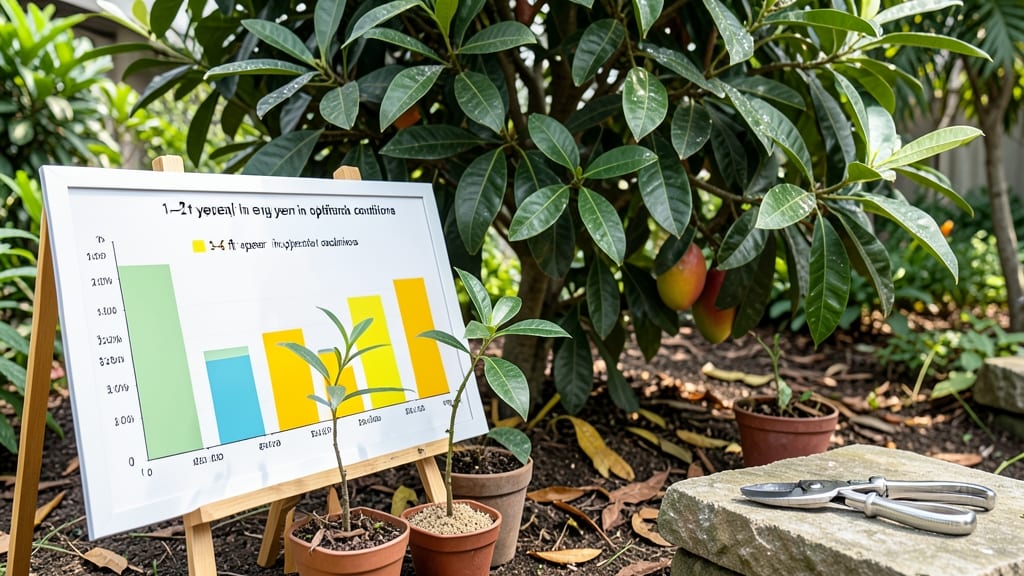
Your mango tree’s growth rate can turn a seedling into a fruit-bearing giant in just 3–5 years—if you know the secrets behind the speed.
If you’ve ever dreamed of harvesting your own sweet, juicy mangoes but wondered how long it would take, the answer depends on your mango tree’s growth rate—and some varieties grow surprisingly fast. 🥭
Most mango trees shoot up 6–12 feet in their first two years, then slow to 2–5 feet annually as they mature, but the right soil, sunlight, and care can double that pace.
Below, I break down the fastest-growing varieties, how to spot stunted growth, and the 3 key factors that turn a slow grower into a tropical powerhouse.


How fast do mango trees grow? Yearly height jumps by age
Growing a mango tree from a tiny seedling to a fruit-bearing giant is one of the most rewarding gardening journeys you can take. But how quickly does this tropical beauty grow? The answer varies dramatically depending on the tree's age, variety, and growing conditions.
In my experience, the first few years are all about establishing strong roots and a sturdy trunk, while later stages focus on rapid vertical growth and fruit production.
For most mango varieties, you can expect dramatic height increases during the first 5 years, with some tropical varieties reaching 10 feet tall by year 3. After that, growth continues but at a more steady pace.
Understanding these growth patterns helps you plan for proper spacing, pruning, and support as your tree matures. Let's break down exactly what to expect year by year.
The first year is all about root establishment. Your young mango tree will focus energy underground rather than shooting upward. This is why you might only see 2-5 feet of growth during its first year.
The key here is to provide consistent moisture and well-draining soil to encourage strong root development. I've found that using a 5-gallon container for the first year helps protect young trees from extreme weather while still allowing root expansion.
By year 2, things get exciting! Your mango tree enters its growth explosion phase, gaining 4-8 feet of height. This is when you'll need to stake your tree to prevent it from toppling over in winds or storms.
I recommend using 3-4 sturdy bamboo stakes and soft tree ties. During this stage, full sun exposure becomes critical—your tree needs at least 8 hours of direct sunlight daily to support this rapid vertical growth.
Years 3 through 5 are when mango trees truly show their potential. With proper care, you can expect 5-10 feet of growth during this period, bringing your tree to a striking 11-23 feet tall.
This is also when you'll start seeing flowering and potential fruit production, though it may take until year 4 or 5 for actual mangoes to ripen. The trunk will thicken significantly during these years, so plan for strong support structures if growing in windy areas.
After the initial growth spurt, mango trees enter a more steady growth phase from years 5 to 10. During this period, you'll see 2-5 feet of growth per year, with the tree focusing more on canopy expansion and fruit production than vertical height increases.
This is when your tree will reach its mature height of 16-36 feet, depending on the variety. Some tropical varieties like the Keitt mango can grow particularly tall during this stage, reaching heights of 30+ feet in ideal conditions.
For trees over 10 years old, growth slows dramatically to just 1-3 feet per year. At this stage, your mango tree is fully mature and focuses primarily on fruit production. The canopy will spread wide, creating a beautiful tropical shade tree.
This is also when you'll need to prune regularly to maintain tree health, remove dead branches, and improve air circulation. I've found that late winter pruning (just before new growth begins) works best for maintaining a balanced shape.
The fastest growth rates occur when mango trees are planted in tropical or subtropical climates with warm temperatures year-round, high humidity, and well-draining volcanic soil. In cooler climates like USDA Zone 9b, growth will be slower, often requiring container growing or greenhouse protection during winter months.
I've successfully grown mango trees in Zone 10 by providing morning sun exposure and afternoon shade during the hottest summer months.
One common misconception is that mango trees grow at a consistent rate every year. In reality, growth can be highly variable depending on seasonal conditions, nutrient availability, and watering practices. For example, during drought periods, growth may stall completely until conditions improve.
Conversely, in ideal tropical conditions with consistent care, some varieties like the Kent mango can grow up to 10 feet in just 2 years. Understanding these fluctuations helps you adjust your care routine accordingly.
To maximize your mango tree's growth potential, focus on three critical factors: sunlight, water, and soil quality. Mango trees are sun worshippers and require full sun exposure to reach their maximum height.
In my garden, I've seen trees in partial shade grow 30% slower than those in full sun. Additionally, deep watering (15-30 gallons per week for established trees) and organic matter-rich soil with a **p
Fastest-growing mango varieties for quick harvests
If you're eager to enjoy homegrown mangoes sooner rather than later, choosing the right variety makes all the difference. Some mango trees can produce fruit in as little as 2-3 years, while others take 5+ years.
The key lies in selecting fast-growing cultivars that thrive in your climate. For tropical and subtropical gardeners, these top 5 varieties deliver both speed and sweet rewards.
From the Keitt variety's rapid height growth to the Kent mango's early fruiting, each of these cultivars offers unique advantages. Whether you're in USDA Zone 10 or a marginally cooler Zone 9b, these varieties can adapt with proper care.
Let's explore which mango trees will get you to that first harvest fastest.
The Keitt mango variety stands out as the fastest grower, often reaching 15 feet tall within just 3 years. This variety thrives in hot, humid climates and produces large, fibre-free fruit that's perfect for fresh eating.
If you're in Zone 10 or 11, Keitt trees typically bear their first fruit in 3-4 years, making them ideal for impatient gardeners.
For those in slightly cooler Zone 9b areas, the Kent variety is an excellent choice. Kent mangoes grow at a steady 3-5 feet per year and often produce fruit in as little as 2-3 years.
Their red-blushed skin and sweet, tangy flavor make them a crowd-pleaser. These trees also handle mild frosts better than most varieties, giving them an edge in marginal climates.
The Haden variety offers a balance between speed and reliability, with 4-6 feet of growth annually and first fruits appearing in 3-5 years. Haden mangoes are particularly well-suited to container growing, making them perfect for urban gardeners with limited space.
Their deep red skin and rich, complex flavor make them one of the most popular varieties among home growers.
If you're looking for a dwarf variety that still delivers on speed, consider the Cogshall mango. While it tops out around 10-15 feet, it grows 2-3 feet per year and often produces fruit in 3 years.
This makes it ideal for backyard gardens or even large containers. The trade-off is slightly smaller fruit, but the convenience often outweighs this for many growers.
Lastly, the Julie mango variety is gaining popularity for its rapid growth and early fruiting. Julie trees grow 4-6 feet annually and can produce fruit in as little as 2-3 years.
Their golden-yellow skin and sweet, fragrant fruit make them a standout choice. This variety also handles heat stress exceptionally well, making it perfect for the hottest regions.
When selecting your mango variety, consider both your local climate and your patience level. While some varieties like Keitt and Julie will get you to fruit faster, others like Haden or Kent offer better adaptability.
With proper care—including full sun exposure, consistent watering, and regular feeding—you'll be enjoying homegrown mangoes in no time. 🥭