
Trees
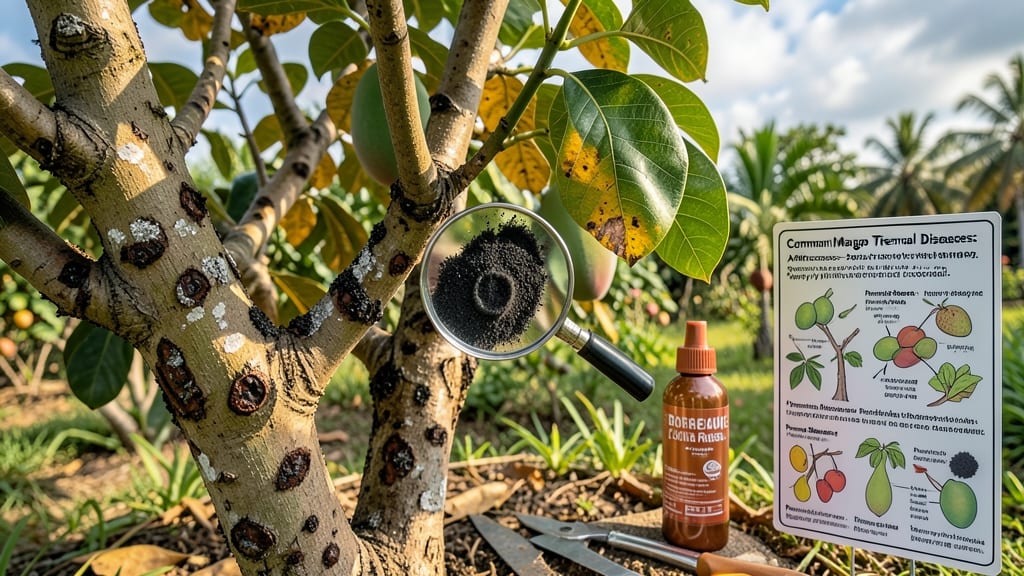
Mango tree fungus turns your golden harvest into a sad, spotted mess—unless you catch it early. 🌿 I’ve seen anthracnose and powdery mildew turn lush canopies into deflated shadows, but the right moves can save your tree.
The key? Spotting symptoms fast (black spots, white powder, or mushy roots) and acting before the fungus spreads like gossip at a potluck.
Most fungal trouble starts with wet leaves, poor airflow, or overwatered soil—classic mistakes even experienced gardeners make. My first mango tree nearly died from anthracnose because I ignored the tiny brown lesions until they covered every leaf.
Now I check for sticky residue (a dead giveaway) and prune for airflow within 2 weeks of spotting the first signs.
You’ll stop the spread with a mix of copper fungicide (for severe cases) and baking soda spray (gentler, but just as effective). I’ve had great luck with a 1-teaspoon baking soda + 1-quart water solution, applied every 7–10 days during rainy seasons.
The goal? Keep your tree’s defenses up and those fungal spores from throwing a party on your branches.
Prevention is easier than cleanup: mulch properly, water at the base (not the leaves), and prune for sunlight. Once you’ve tackled the fungus, your tree will bounce back—stronger, healthier, and ready for next season’s harvest. No more sad, spotted fruit, just juicy, sun-ripened mangoes.
Root Causes Of Tree Decay
Fungal infections in mango trees aren’t just random bad luck—they thrive because of specific conditions that weaken your tree’s defenses. Understanding these triggers helps you prevent outbreaks before they start. Below, we break down the real reasons fungi take hold, from environmental factors to tree health oversights.
Fungi love damp, stagnant air. When mango trees grow too closely together or are planted in shaded, low-light areas, airflow stagnates, creating the perfect breeding ground for spores. High humidity (above 70%) further accelerates fungal growth, especially on leaves and fruit.
- Why it happens: Dense foliage traps moisture, while poor spacing lets humidity linger near the tree’s canopy.
- Actionable fix:
- Prune branches to open the canopy and improve airflow.
- Space trees 15–20 feet apart to reduce humidity buildup.
- Use drip irrigation instead of overhead watering to keep leaves dry.
Fungal spores need a way in. Cracks, pruning wounds, or insect damage (like borer holes) create open doors for pathogens like Anthracnose or Powdery Mildew to invade. Even minor scratches from tools or hail can become infection sites.
- Why it happens: Improper pruning or physical damage disrupts the tree’s protective bark layer, exposing vulnerable tissue.
- Actionable fix:
- Always sterilize pruning tools with rubbing alcohol between cuts.
- Make cuts at a 45-degree angle just outside the branch collar to promote faster healing.
- Seal large wounds with pruning sealant (like Tanglefoot Tree Wound Pruning Seal) to block spores.
While mango trees need consistent moisture, waterlogged soil suffocates roots and invites fungal invaders like Phytophthora. Overhead watering also keeps leaves damp for extended periods, giving fungi a 24/7 feast.
| Signs of Overwatering | Fungal Risks |
|---|---|
| Yellowing leaves (chlorosis) | Root rot (soil-borne fungi) |
| Mushrooms sprouting at the base | Armillaria root disease |
| Black spots on fruit/leaves | Anthracnose (spread by moisture) |
Actionable fix:
- Water deeply but infrequently—aim for 1–1.5 inches per week, adjusting for rain.
- Improve drainage with organic mulch (straw or wood chips) to keep soil aerated.
- Avoid watering in the evening to let leaves dry overnight.
Insects like fruit flies, scale, or mealybugs don’t just damage trees—they carry fungal spores on their bodies. Their saliva and waste also create sticky residues that trap moisture, accelerating fungal growth.
- Why it happens: Weakened trees (from pest attacks) have lower resistance to fungal infections.
- Actionable fix:
- Monitor trees for sticky residue (honeydew) or sooty mold (black fungal growth).
- Use neem oil or horticultural oil to smother pests before they spread disease.
- Introduce beneficial insects (like ladybugs) to control pest populations naturally.
A tree starved of nutrients can’t fight off fungal attacks. Low nitrogen, potassium, or micronutrients (like zinc or magnesium) leave mango trees stressed, making them prime targets for pathogens.
- Why it happens: Poor soil health or imbalanced fertilizers (e.g., too much phosphorus) disrupt the tree’s immune system.
- Actionable fix:
- Test soil annually and amend with compost or balanced fertilizer (e.g., 6-6-6 NPK ratio).
- Apply micronutrient sprays (like seaweed extract) to boost natural resistance.
- Avoid synthetic fertilizers that burn roots—opt for slow-release organic options.
Sudden temperature swings, drought, or flooding shock the tree’s system, lowering its ability to resist fungi. For example, Powdery Mildew thrives when days are hot and nights are cool—a common pattern in tropical climates.
- Why it happens: Environmental stress disrupts the tree’s natural defenses, like closing stomata (leaf pores) and reducing antifungal compounds.
- Actionable fix:
- Mulch heavily during droughts to retain moisture and regulate soil temp.
- Provide shade cloth in peak sun (10–50% coverage) to prevent heat stress.
- After storms, inspect for cracks and treat wounds immediately with fungicide.
Quick Fixes for Tree Blight
Fungal infections on your mango tree can feel like a losing battle—until you know the right moves. The good news? Most tree blights respond well to early, targeted action.
Below, we’ve mapped out practical solutions for the most common fungal threats, from powdery mildew to anthracnose, along with prevention tips to keep your tree thriving. Think of this as your mango tree’s first-aid kit, but with less Band-Aids and more long-term wins.
Cause: White, powdery patches on leaves (often from high humidity or poor airflow). Fix:
- 🔥 Prune for Airflow – Trim dense branches to let sunlight and air circulate. Fungus loves damp, shaded spots.
- 🍳 Homemade Spray – Mix 1 tsp baking soda + 1 tbsp neem oil + 1 tsp dish soap in a gallon of water. Spray leaves (not fruit) every 7–10 days until clear.
- 👨🍳 Fungicide Boost – For stubborn cases, use copper-based fungicide (follow label rates). Reapply after rain.
- ⏰ Timing Matters – Apply sprays early morning or late evening to avoid burning leaves in direct sun.
💡 Prevention Pro Tip:
- Space trees 10+ feet apart to reduce humidity buildup.
- Water at the base (not overhead) to keep foliage dry.
Cause: Dark, sunken spots on leaves/fruit (common in wet seasons). Fix:
- 🔪 Remove Infected Parts – Prune all spotted leaves/fruit immediately and dispose of them (don’t compost!). Fungus spreads via spores.
- 🥘 Soil Sterilization – Mix 1 cup copper sulfate into the top 6 inches of soil around the tree’s drip line. Repeat monthly if rains are heavy.
- 🌡️ Adjust Watering – Water deeply 2–3x/week (early morning) instead of daily light sprinkles. Wet leaves = fungus party.
- ✨ Organic Shield – Spray potassium bicarbonate (2 tbsp/gallon water) every 2 weeks. Safe for edible fruit after drying.
💡 Prevention Pro Tip:
- Mulch with straw (not wood chips) to reduce soil splash onto leaves.
- Harvest fruit early if anthracnose is rampant—ripe fruit is more vulnerable.
Cause: Yellowing leaves, soft stems, or a foul smell at the base (from overwatering or poor drainage). Fix:
- 🚿 Check the Soil – Stick a finger 2 inches deep. If damp, pause watering for 1–2 weeks. Let the soil dry out.
- 🔧 Improve Drainage –
- Dig a 6-inch-deep trench around the tree (1 foot from the trunk) to redirect water.
- Amend soil with perlite or coarse sand (mix 1 part perlite to 3 parts soil).
- 🍄 Fungal Antagonist – Apply trichoderma fungus (a beneficial microbe) to outcompete root rot pathogens. Follow package rates.
- 🌱 Prune Strategically – Cut back 1/3 of the canopy to reduce the tree’s water needs while it recovers.
💡 Prevention Pro Tip:
- Plant on a slight mound (6 inches high) to encourage runoff.
- Use drip irrigation instead of sprinklers—roots hate soggy shoes.
No matter the blight, these universal tactics will fortify your tree: 1. 🛡️ Copper Spray – Apply copper fungicide (like Bonide Copper Fungicide) every 3–4 weeks during rainy seasons. It’s a broad-spectrum shield.
- 🌿 Neem Oil Tune-Up – Mix 2 tbsp neem oil + 1 tsp mild soap in a gallon of water. Spray every 2 weeks to prevent spores from settling.
- 🍂 Clean-Up Crew – After harvest, rake and remove all fallen leaves/fruit from the base.
Burn or trash them—not the compost pile!
⚠️ When to Call a Pro: If your tree shows oozing cankers, wilting despite fixes, or widespread fruit drop, consult a certified arborist. Some blights (like mango malformation) need systemic treatments.
🎯 Final Win: Fungal issues are 90% preventable with consistent care. Think of your mango tree like a prized athlete—prune for agility, feed for strength, and shield from the elements. With these fixes, your tree will bounce back faster than you can say “mango season!” 🥭✨
Frequently asked questions
How can I tell if my mango tree has fungus vs. a vitamin deficiency?
Fungal infections show up as distinct spots or growths—powdery white patches for mildew, dark sunken spots for anthracnose, or fuzzy mold. Deficiencies cause uniform discoloration (yellowing between veins for nitrogen, purple stems for phosphorus) without texture changes. Check the leaf undersides too—fungus often starts there.
Will fungicides harm my mango fruit if I spray too close?
Most copper-based or potassium bicarbonate sprays are safe after drying (wait 24 hours before eating). Neem oil is fruit-safe at any time. Avoid chemical fungicides like chlorothalonil near harvest—opt for organic options instead. Always follow label instructions for timing!
Can I save my mango tree if the fungus has spread to the trunk?
Early trunk infections (like Armillaria root rot) may be treatable with copper fungicide injections and improved drainage. For severe cases, consult an arborist about systemic fungicides or even grafting disease-free branches. Remove all infected wood first—fungus won't spread if you cut off its food source.
How often should I inspect my mango tree for early fungus signs?
Check your tree every 7–10 days during rainy seasons or after storms. Focus on new growth, leaf undersides, and fruit—these are fungus hotspots. Morning inspections work best when leaves are dry. Keep a journal to track changes over time!
Are there any natural fungicides that work better than baking soda?
Yes! Garlic spray (blend 10 garlic cloves + 1 quart water) has natural antifungal compounds. Chamomile tea (steep 1 cup dried flowers in 1 quart water) also works well. For stubborn cases, hydrogen peroxide (3%) (1 tbsp per quart water) kills spores on contact. Always test sprays on a small leaf area first.