
Pruning
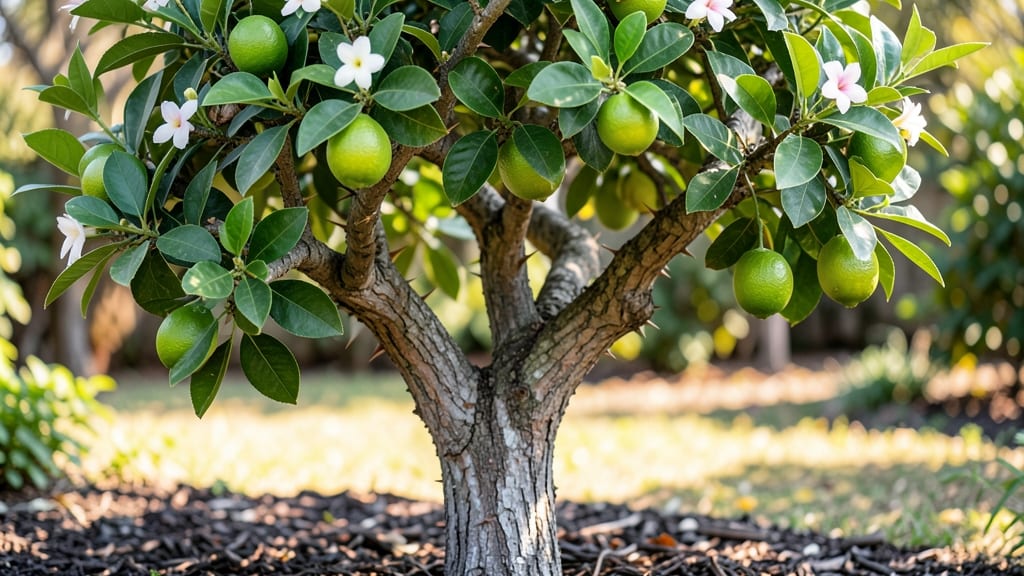
Growing a lime tree with thorns means embracing the challenge of its spiny branches while unlocking zesty, homegrown fruit. 🌱 My first Mexican lime tree was a jungle of prickles—until I learned how to prune them back safely.
The key isn’t removing every thorn but shaping the tree so you can reach the fruit without getting scratched. These trees thrive in warm climates with full sun and well-draining soil, but even in containers, they’ll produce fruit if you give them the right care.
The thorns are nature’s way of protecting the tree, but with strategic pruning, you can make harvesting easier—and more rewarding. By focusing on open-center pruning, you’ll encourage more fruit-bearing branches while keeping the tree manageable.
The first harvest might take a year or two, but once it starts, you’ll have fresh limes year-round. Just be patient—good things come to those who prune. The best part? Once you master the technique, you’ll never buy store-bought limes again. The tangy, bright flavor is worth every thorn-prick.
Ready to get started?
📚 In This Guide
- What you need
- Instructions
- Tips and common mistakes
- Wrapping up and next steps
What you need
- ○ Pruning shears – Bypass pruners (sharp, 6–8 inch blades) for clean cuts on small branches. Optional: Felco F-2 or Gonicc G9 for durability.
- ● Loppers – Pole saw or long-handled loppers (for thicker branches, 2–3 inches in diameter). Example: Fiskars X27.
- ● Pruning saw – Curved-tooth saw for branches over 3 inches thick. Tip: Bypass-style prevents tearing.
- ● Gloves – Heavy-duty, thorn-proof gloves (e.g., Frogg Toggs or Southwood with Kevlar).
- ● Safety glasses – ANSI-rated to protect against debris.
- ● Ladder – Sturdy, extendable aluminum ladder (12–16 feet, rated for 300+ lbs). Pro tip: Use non-slip feet!
- ● Rubbing alcohol (70%+) – For sterilizing tools between cuts (prevents disease).
- ○ Pruning sealant – Optional but recommended for large cuts (e.g., Tanglefoot Tree Wound Pruning Sealer).
- ● Disinfectant spray – Hydrogen peroxide (3%) or bleach solution (1:10 ratio) for tools.
- ● Best time to prune – Late winter/early spring (before new growth) or immediately after harvest (avoid frost or extreme heat).
- ● Weather check – Clear, dry day (humidity can spread fungal spores).
- ● Tree health assessment – Inspect for pests/diseases (e.g., citrus leaf miner) before pruning.
- ● Plan your cuts – Sketch a rough map of branches to remove (aim for 20–30% of the tree’s canopy).
Step-by-step thornless pruning for safe lime tree care
Transform your thorny lime tree into a safer, more manageable fruit producer with this simple pruning method.
✂️ Step 1: Identify and Mark Thorny Branches
Start by examining your lime tree in bright daylight—thorns appear most obvious when leaves are fully exposed. Focus on branches with clusters of thorns along the stem, as these are the most aggressive. Use a permanent marker to circle these branches at their base; this prevents accidental cuts later.
Here's the thing—thorny growth often appears near new shoots or where branches fork. I like to trace each branch back to its origin point on the main trunk. This helps me visualize the entire branch's structure before making any cuts. Remember, thorns rarely appear on older, thicker branches, so prioritize younger wood.
✂️ Step 2: Use the Right Tools and Technique
Grab your sharp bypass pruners (never dull tools—they crush branches instead of clean cuts) and sterilize them with rubbing alcohol. For branches thicker than ½ inch, switch to loppers to avoid tearing the bark. Always cut at a 45-degree angle, just above a leaf node or outward-facing bud.
I know it seems weird, but make your cuts about ¼ inch above the bud—this ensures the new growth emerges from the correct direction. For branches with multiple thorns, cut back to the nearest point where the stem appears smooth. You'll notice the thorns thin out as you move closer to the trunk.
☀️ Step 3: Prune in Stages for Minimal Stress
Never remove more than ⅓ of the tree's foliage in one session—this shocks the tree and reduces fruit production. I spread my pruning across 3 sessions, spaced 2-3 weeks apart, during the tree's dormant season (late winter to early spring). After each session, step back and assess the tree's shape from all sides.
Watch for new growth emerging from the pruned areas within 4-6 weeks. This signals the tree is recovering well. If you see yellowing leaves or wilting, you've pruned too aggressively—pause and let the tree rest before continuing. Real talk: Over-pruning is the fastest way to kill your fruit production.
🌿 Step 4: Encourage Fruit-Bearing Branches
After removing thorny growth, focus on the remaining branches by thinning them to allow better air circulation. Aim to space branches 6-12 inches apart, depending on the tree's size. This prevents overcrowding and reduces future thorn development. Use your pruners to trim back any crossing branches, cutting at the base of the smaller branch.
Here's where it gets fun—watch for new shoots emerging from the pruned areas. These are your future fruit-bearing branches. In 6-8 weeks, you'll see small buds forming along these new shoots. These buds are your lime tree's promise of fruit, so protect them by avoiding heavy pruning during this time.
🪴 Step 5: Post-Pruning Care for Strong Recovery
Water the tree deeply 2-3 days after pruning to help it recover from the stress. Use a slow drip system or soaker hose to deliver moisture directly to the roots without disturbing the soil. Avoid overhead watering, which can introduce fungal diseases through fresh cuts.
Apply a balanced fertilizer (10-10-10 ratio) around the tree's drip line in 4-6 weeks to support new growth. You'll see the difference in 2-3 months when the tree bursts with fresh, thorn-free branches. Keep an eye out for any new thorny growth—catch it early, and you'll keep your tree manageable year-round.
Tips & tricks for safe lime tree pruning
These practical strategies will help you transform your thorny lime tree into a safer, more productive fruit producer.
Visual Inspection Tip: Always prune on a clear, sunny day when thorns are most visible against the foliage. I've found that early morning light reduces shadows that can hide smaller thorns. If you're unsure about a branch, run your hand along it—thorns will catch your skin even if they're not immediately obvious. This simple check prevents accidental cuts later.
Tool Selection: Your pruners should be as sharp as a chef's knife—dull tools crush stems instead of making clean cuts, which stresses the tree. For branches thicker than ½ inch, loppers are your best friend. I keep a small bottle of rubbing alcohol handy to sterilize tools between cuts, which prevents spreading disease between branches.
Pruning Strategy: When cutting back thorny branches, aim to remove the entire cluster rather than individual thorns. This is where tracing branches to their origin point pays off—you'll often find that cutting back to a smooth section of stem eliminates multiple thorns at once. The key is patience: take your time to identify the cleanest possible cut point closer to the trunk.
Recovery Monitoring: After your first pruning session, keep a simple log of new growth appearance times. Most trees show signs of recovery within 4-6 weeks, but some varieties may take longer. I've noticed that trees in cooler climates often need an extra 1-2 weeks compared to those in warmer regions. This helps you adjust your schedule for subsequent pruning sessions.
Pro Tips for Lime Tree With Thorns
- These practical strategies will help you transform your thorny lime tree into a safer, more productive fruit producer.
- Visual Inspection Tip: Always prune on a clear, sunny day when thorns are most visible against the foliage. I've foun...
- Tool Selection: Your pruners should be as sharp as a chef's knife—dull tools crush stems instead of making clean cuts...
Frequently asked questions
Got questions about managing your lime tree with thorns? You’re not alone—these trees can be tricky! Below, we’ve answered the most common questions to help you prune safely and keep your tree thriving year-round.
1. How do I safely prune a lime tree with thorns without getting hurt?
Wear thick, long-sleeved gloves (leather or heavy-duty gardening gloves) and protective eyewear. Use long-handled pruners or a pole saw to avoid reaching into thorny branches. Work on a clear day when branches are less brittle, and consider pruning early in the morning to reduce sap flow (and stickiness!).
2. When is the best time to prune a lime tree to encourage fruit production?
The ideal time is late winter or early spring, just before new growth begins. This promotes healthy blooming and fruit set. Avoid heavy pruning in summer or fall, as it can stress the tree and reduce fruit yield. For tropical lime varieties, light pruning can happen year-round, but prioritize the dormant season for best results.
3. Can I make my lime tree thornless naturally, or do I need to remove thorns entirely?
Lime trees (especially Citrus aurantifolia) are naturally thorny, but you can reduce thorns by pruning aggressively during dormant seasons. Focus on removing suckers and water sprouts, which often produce more thorns. While you can’t eliminate thorns entirely, thornless varieties like ‘Bearss’ or ‘Mexican’ limes exist—consider grafting if you’re starting fresh!
4. What should I do if my lime tree starts bleeding sap after pruning?
Sap bleeding is normal but can attract pests. To minimize it, prune on a cool, dry day and use clean, sharp tools to avoid tearing bark. Seal cuts with pruning sealant (optional) or let them air-dry. Avoid over-pruning—remove no more than 25-30% of the canopy in one session to reduce stress and sap flow.
5. Are there alternatives to pruning thorns if I don’t want to deal with them?
Yes! If thorns are a dealbreaker, consider container growing with a thornless variety or grafting a thornless lime onto a rootstock. You can also train the tree as a espalier (flat against a wall) to limit branch spread and thorn exposure. For existing trees, regular pruning + physical barriers (like fencing) can help keep thorns at bay.
Wrapping up and next steps
Pruning your lime tree with thorns doesn’t have to be a daunting task—with the right tools, techniques, and timing, you can transform it into a thornless, fruit-bearing beauty year-round! 🌿 The key is patience, consistency, and a focus on safety, ensuring your tree thrives while keeping your hands (and pets!) protected.
Whether you’re a seasoned gardener or a curious beginner, every careful cut brings you closer to a safer, more productive harvest.
Ready to take the next step? Start by scheduling your first pruning session in early spring or late winter—before new growth begins. Grab your gloves, shears, and a cup of coffee, and enjoy the process! Your future lime harvest (and peace of mind) will thank you. 🍋✨