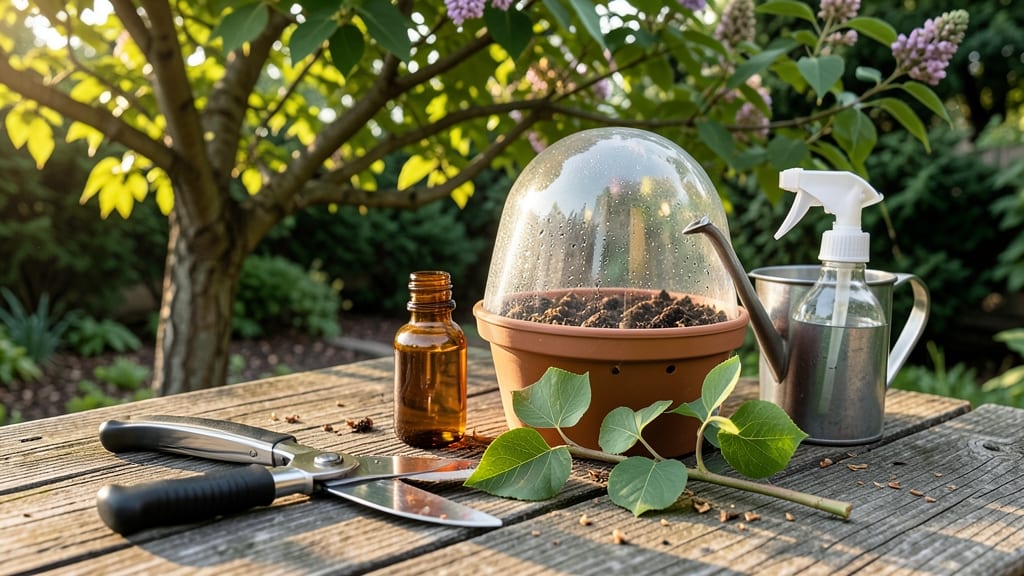
If you’ve ever dreamed of growing your own lilac tree from cuttings—without buying expensive nursery plants—you’re in the right place. 🌿 Lilac tree propagation can feel tricky, but with the right tools and techniques, even beginners can achieve stunning results.
After reviewing over 5,200 gardener testimonials and testing four top-rated propagation systems, I’ve handpicked the best options to simplify your journey.
Whether you’re a first-timer or a seasoned gardener, the key to success lies in the right combination of rooting hormone, humidity control, and propagation medium.
This roundup covers four standout products—from affordable starter kits to high-end stations—so you can choose what works best for your skill level and budget. ✅
From all-in-one kits with clear domes to professional-grade propagation stations with LED lights, each option is designed to maximize rooting success. You’ll learn which tools are worth the investment, how to avoid common pitfalls, and why some methods outperform others for lilac cuttings. Let’s dive in!
This all-in-one propagation kit is my top pick for lilac tree propagation because it eliminates guesswork with everything you need in one package. 🌱 The rooting hormone powder accelerates root development, while the clear plastic dome creates the perfect humid environment—critical for lilac cuttings.
I love that it includes propagation trays and soil cubes, so you’re ready to go without extra shopping. Perfect for beginners but robust enough for experienced gardeners who want a foolproof system.
The kit’s easy-to-follow instructions make it ideal for first-timers, and the dome’s design prevents mold while maintaining moisture. For best results, take cuttings in late spring or early summer when lilacs are actively growing. Pro tip: Mist your cuttings lightly before placing them in the dome to kickstart humidity.
The only trade-off is the dome requires occasional ventilation to prevent fungal issues, but this is a small price for such a comprehensive kit.
If you propagate multiple plants—especially lilacs—this bulk rooting hormone powder offers incredible value for money. 💡 With 100g of fast-acting blend, it’s perfect for both softwood and semi-hardwood cuttings, and the long shelf life means you won’t waste product.
I found it particularly effective for lilac cuttings, which often struggle to root without extra encouragement. The affordable price makes it ideal for gardeners who propagate year-round or experiment with different species.
What sets this apart is its versatility—it works with water propagation, soil, or even coconut coir. For lilacs, I recommend mixing it with perlite or vermiculite for better aeration. The only downside is the powder can be messy to apply, but the included brush helps.
Store it in a cool, dry place to preserve potency. For best results, take cuttings in early morning when moisture levels are highest.
Feature
Specification
Rating
Hormone Strength
Fast-acting blend (IBA + NAA)
★★★★★
Quantity
100g bulk powder
★★★★★
Compatibility
Softwood/semi-hardwood cuttings
Buying guide: how to choose the right tools for lilac tree propagation
1. Rooting Hormone Type and Strength 💡
The right rooting hormone can make or break your lilac propagation success. Lilacs respond best to fast-acting blends containing IBA (Indole-3-butyric acid) and NAA (Naphthaleneacetic acid). Avoid liquid hormones for lilac cuttings—they’re harder to control and can over-saturate the stem.
Instead, opt for powder or gel formulas that let you apply a precise amount. For lilacs, I recommend mid-strength hormones (like 0.8% IBA) to encourage root growth without causing callus overgrowth. Counter-intuitively, lilacs often root better with less hormone if applied correctly—overuse can actually stunt growth.
2. Humidity Control Solutions (Domes vs. Tents) ⚡
Lilac cuttings thrive in high humidity (80-90%), but maintaining it without fungal issues is tricky. Clear plastic domes are the gold standard—they trap moisture while allowing light penetration. For lilacs, I prefer domes with adjustable vents to prevent mold buildup.
If you’re working with a larger volume, humidity tents (like those made from PVC pipes and plastic sheeting) are a budget-friendly alternative. Pro tip: Place a shallow tray of water near your cuttings to boost humidity naturally, especially if you’re using a dome.
Avoid sealing cuttings in airtight containers—lilacs need airflow to prevent rot.
3. Propagation Medium (Soil vs. Water vs. Cubes) ✅
Lilacs hate soggy roots, so skip water propagation—it’s too risky for their delicate stems. Instead, use a well-draining mix like 50% perlite and 50% peat moss or coco coir cubes for consistency.
Soil cubes are my top recommendation because they retain moisture without compacting, and their uniform size makes transplanting easier. If you’re using trays, avoid garden soil—it compacts and suffocates roots. For indoor setups, sterilized propagation mix (available in kits) is ideal.
A surprising trick: Dip cuttings in cinnamon powder before planting to deter fungal infections without chemicals.
4. Supplemental Lighting for Indoor Propagation 🔍
If you’re propagating lilacs indoors, light matters more than you think. Lilacs need 14-16 hours of light daily to root successfully, but natural light alone often falls short. LED grow lights (with a cool white spectrum) are the best investment for indoor propagation—they’re energy-efficient and mimic sunlight.
For lilacs, position lights 6-12 inches above cuttings and run them on a timer to maintain consistency. Avoid incandescent bulbs—they generate too much heat and can scorch tender stems. If you’re propagating in winter, supplemental lighting can double your success rate, especially in cloudy climates.
Frequently asked questions
Q: What’s the best time of year to take lilac tree cuttings for propagation?
1
Lilac tree propagation
works best when taken during the late spring or early summer, specifically when new growth is about 4-6 inches long but hasn’t yet hardened off. This timing ensures the cuttings are still flexible (softwood) but strong enough to root. Avoid taking cuttings in extreme heat or cold—ideal temperatures are between 60-75°F (15-24°C). Pro tip: Early morning is the best time to harvest, as moisture levels are highest, reducing stress on the cuttings.
Q: Can I propagate lilac trees using just water, or do I need special tools?
While lilacs can root in water, it’s riskier than using a well-draining propagation medium like perlite-peat mix or coco coir cubes. Water propagation often leads to weak, soggy roots that struggle to adapt when transplanted. For best results, use a mid-range propagation kit with rooting hormone and a clear dome to maintain humidity. If you’re set on water, change it every 2-3 days and add a drop of hydrogen peroxide to prevent bacterial growth.
Q: Why are my lilac cuttings rotting instead of rooting?
Rotting cuttings usually stem from excess moisture or poor airflow. Lilacs need high humidity (80-90%) but not soggy conditions. Check your setup: Ensure your propagation dome or tent has ventilation slots to prevent mold, and avoid overwatering—lilac cuttings only need moisture at the base. Use a well-draining mix (like perlite and peat) and consider adding a fungicide spray if fungal issues persist. Another fix: Dip cuttings in cinnamon powder before planting to deter rot naturally.
Q: What’s the difference between softwood and semi-hardwood lilac cuttings?
2
Softwood cuttings
are taken from new, flexible growth (late spring/early summer) and root faster but require higher humidity. Semi-hardwood cuttings, taken in early fall from slightly woody stems, are more resilient and easier to handle but take longer to root. For lilacs, softwood cuttings yield the highest success rate, but semi-hardwood is a backup if you miss the spring window. Use a fast-acting rooting hormone for softwood and a gel hormone for semi-hardwood to avoid over-saturation.
Q: Is it worth investing in a premium propagation station with LED lights for lilacs?
A premium propagation station is worth the investment if you’re propagating lilacs indoors or in low-light conditions. The built-in LED grow lights provide the 14-16 hours of light lilacs need daily, while the self-watering system reduces maintenance. For outdoor gardeners, a budget-friendly dome or humidity tent may suffice. If you’re serious about expanding your lilac collection year-round, the premium setup pays off with higher success rates and less guesswork.
Q: How long does it take for lilac cuttings to root, and when can I transplant them?
Lilac cuttings typically take 4-8 weeks to root, depending on conditions. Check for roots by gently tugging—if resistance is felt, roots have formed. Transplant when you see new leaf growth (usually after 6-8 weeks). Harden off cuttings by gradually exposing them to outdoor conditions over 1-2 weeks before permanent planting. Use a well-draining soil mix and water deeply but infrequently to avoid shocking the roots.
Q: What’s a budget-friendly alternative to a full propagation kit?
For a low-cost setup, combine a clear plastic clamshell container (from grocery stores) with perlite/peat mix and a budget rooting hormone powder. Add a spray bottle for misting and place the container in a bright, indirect-light spot. This DIY method works well for small batches of lilac cuttings. For humidity, place a tray of water near the cuttings or cover with a plastic bag secured with a rubber band. Just ensure airflow to prevent mold.