
How To
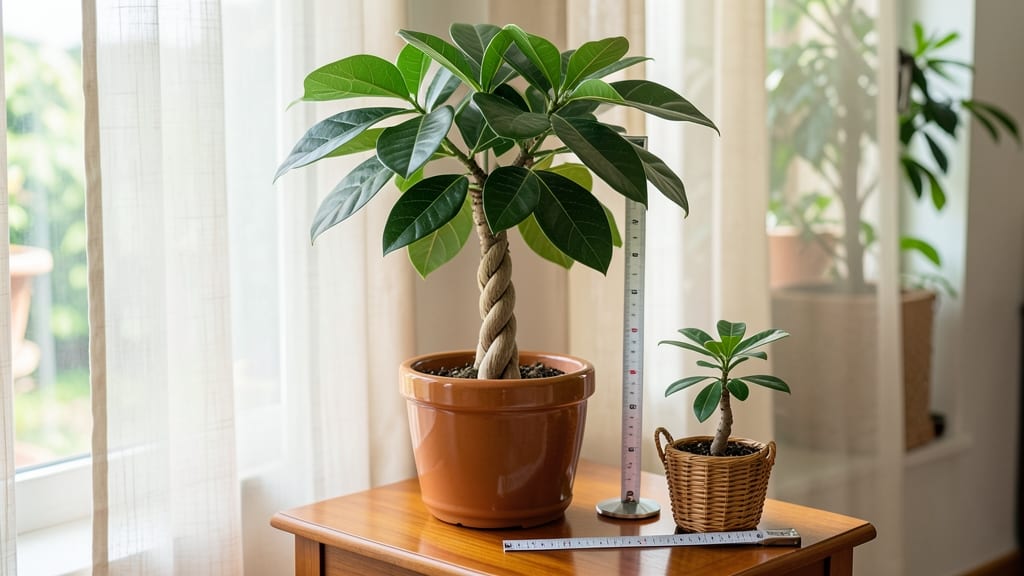
The Money Tree grows between 6 and 10 feet tall indoors, but its final height depends on the variety you choose and how you care for it.
Picture this: your compact 3-foot Money Tree 🌿 suddenly shooting up toward the ceiling, leaving you scrambling to find a new home for it. That’s why knowing your plant’s growth potential—and how to control it—is key to keeping it happy in your space.
Some varieties stay small and bushy, perfect for apartments or offices, while others reach towering heights that need careful pruning to keep them manageable. Light, pruning, and pot size all play a role in how tall your Money Tree will grow, so let’s break it down.
In this guide, you’ll learn how to predict your Money Tree’s height, choose the right variety for your space, and use simple care tricks to keep it at your ideal size—whether that’s a tall statement plant or a cozy tabletop buddy.


Money tree height by variety: small, medium, and giant growth expectations
The money tree (Pachira aquatica) is famous for its slow, steady growth and striking braided trunks, but did you know its mature height can vary wildly? Some varieties stay compact enough for apartments, while others become towering statement plants in sunrooms.
The key difference? Variety selection and care habits. Let’s break down what to expect from each type so you can choose—or prune—your money tree for your space.
Whether you’re dreaming of a dwarf money tree for a desk or a giant specimen to fill a corner, understanding growth expectations helps you plan. Most money trees grow 1-2 feet per year, but some cultivars push 10+ feet tall with ideal conditions.
The variety you pick determines whether you’ll need a ceiling fan or a shelf within a decade.
Here’s a quick comparison of the three main categories: small (3-5 ft), medium (6-8 ft), and giant (10-12+ ft). Use this as your guide to match your money tree’s future height with your home’s layout.
The dwarf varieties are perfect if you’re limited to small spaces or want a money tree that stays manageable. These typically reach 3–5 feet tall and grow at a glacial pace, making them ideal for desks or shelves.
My 3-foot dwarf money tree has been in my office for five years and shows no signs of outgrowing its spot—though it does need occasional pruning to maintain its shape.
For medium-height money trees, aim for the standard varieties, which hit 6–8 feet and thrive in living rooms or hallways. These are the most common in nurseries and grow 1–2 feet per year with proper care.
If you’re placing yours near a ceiling fan, monitor its growth closely—some years, it might surprise you with a 3-foot leap!
If you’re after a statement plant, the giant money tree varieties are worth the wait. These can reach 10–12 feet or more and are often found in conservatories or large gardens.
They grow faster than dwarf types but require bright indirect light and regular pruning to keep them from becoming unruly
Factors that determine how tall your money tree will grow indoors
The height of your money tree (Pachira aquatica) depends on four key factors: light exposure, pruning habits, pot size, and humidity levels. Each plays a critical role in whether your plant grows into a 6-foot statement piece or stays compact at 3-4 feet.
Let’s break down how to control these variables for your desired height.
First, light exposure is the most influential factor. Money trees thrive in bright indirect light, which encourages faster, taller growth. Place yours near an east or north-facing window for optimal conditions.
If your tree gets low light, it’ll grow slower and stay shorter, but expect leggy stems. Too much direct sun can scorch leaves, stunting growth entirely.
Next, pruning frequency directly impacts height. Regular pruning—especially pinching back new growth—promotes bushier, fuller growth rather than vertical height. If you want a taller tree, prune minimally. For a compact shape, prune more aggressively in early spring to shape the canopy and encourage lateral branches.
Growth Factors for Money Tree Height
Bright Indirect Light
- ✅ Pros: Faster growth, fuller leaves
- ❌ Cons: Risk of legginess if light is too low
Minimal Pruning
- ✅ Pros: Encourages vertical growth
- ❌ Cons: Can look sparse without branches
Large Pot
- ✅ Pros: Supports taller growth
- ❌ Cons: Requires more frequent watering
High Humidity
- ✅ Pros: Healthier leaves, faster growth
- ❌ Cons: Risk of fungal issues if overdone
Pot size also matters—root-bound trees grow taller as they stretch toward light. If your money tree is in a small pot, it’ll focus energy on height rather than foliage.
Repot into a 1-2 inch larger container every 2-3 years to support healthy growth. Just ensure the pot has drainage holes to prevent root rot, which can stunt growth.
Finally, humidity levels affect growth speed. Money trees thrive in 40-60% humidity, which mimics their tropical origins. In dry indoor air, growth slows, and leaves may brown. Use a humidifier or place the pot on a pebble tray with water to boost humidity.
This small adjustment can make a noticeable difference in growth rate and overall health.
By tweaking these four factors, you can steer your money tree toward your ideal height—whether you want a compact desk companion or a towering indoor focal point. Monitor your tree’s response to adjustments and fine-tune as needed for the perfect fit in your space. 🌿