
Pruning
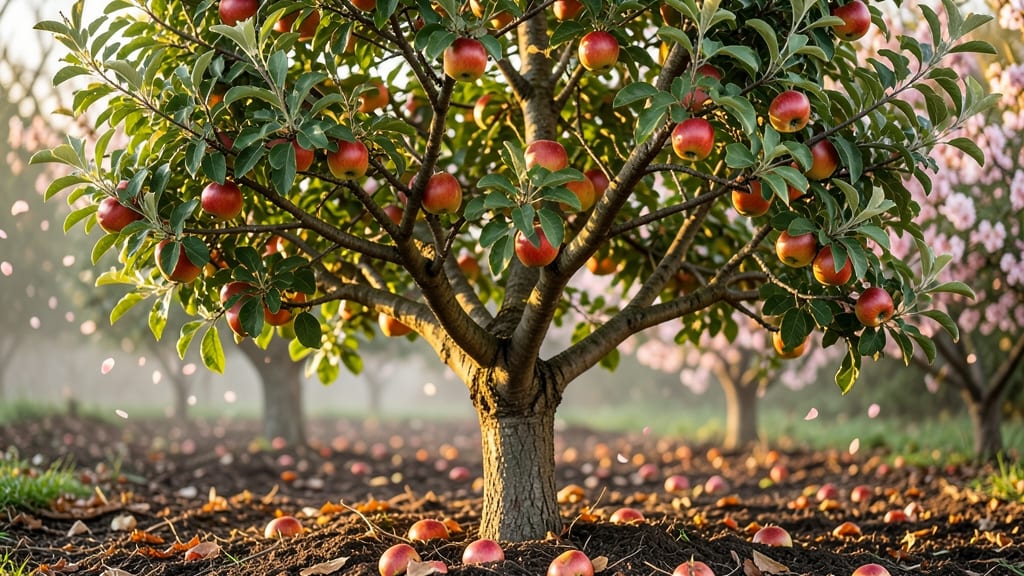
Your Honeycrisp apple tree care starts with knowing exactly when and how to prune for that juicy, crisp harvest every fall. 🌳 I’ve watched these trees go from scraggly saplings to heavy-fruiting giants in just five years—and the secret isn’t fancy tools, but timing and technique.
The right cuts in late winter or early spring mean fewer diseases, better airflow, and fruit that actually ripens instead of rotting on the branch.
Most gardeners overcomplicate it, but Honeycrisp trees actually thrive with three simple pruning goals: open the center for sunlight, remove dead wood, and shape for easy harvest. You’ll need sharp bypass pruners, a ladder (for taller branches), and about 30 minutes for a medium-sized tree.
The payoff? Trees that produce 50% more fruit with fewer pests and less stress. Even my first attempt—where I nearly hacked off half a branch—ended with a bumper crop.
Beyond pruning, soil matters more than you’d think. These trees love well-draining, slightly acidic soil (pH 6.0–6.5) and deep watering—think 1–2 inches per week during growing season. Mulch helps retain moisture, and a balanced fertilizer in early spring keeps them vigorous.
The result? Trees that look like they belong in an orchard, not your backyard, with fruit so sweet it’ll have neighbors knocking on your door.
Seasonal care keeps them thriving year-round: winter protection for young trees, summer thinning to prevent overcrowded fruit, and fall cleanup to remove fallen apples (which harbor pests). Whether you’re a first-timer or a seasoned grower, these steps turn good trees into exceptional ones. Let’s get those branches in shape!
📚 In This Guide
- What you need
- Instructions
- Tips and common mistakes
- Wrapping up and next steps
What you need
- ● High-quality bare-root or potted Honeycrisp sapling (choose disease-resistant varieties if available).
- ● Well-draining soil mix (50% topsoil, 30% compost, 20% sand or perlite for loose texture).
- ● 5-gallon bucket of organic compost (for nutrient boost).
- ● Slow-release fertilizer (10-10-10 NPK ratio, 1 lb per tree).
- ● Mulch (wood chips or straw) (2–3 inches, keep 6 inches away from trunk).
- ● Bypass pruners (sharp, 5–7 inch blades for clean cuts).
- ● Loppers (for thicker branches, 8–12 inch reach).
- ● Pruning saw (for large branches, 10–12 inch blade).
- ● Gloves (cut-resistant) (to protect hands from thorns and sap).
- ● Disinfectant (70% isopropyl alcohol or bleach solution) (to sterilize tools between cuts).
- ● Tree support stakes & ties (for young trees, 2–3 stakes per tree).
- ● Drip irrigation system (for consistent watering, 1–2 gallons per tree daily).
- ● Fruit thinning shears (to reduce overcrowding, small 4-inch blades).
- ● Pest/disease monitor traps (e.g., pheromone traps for codling moths).
- ● Tree wrap (for young trunks) (to prevent sunscald in winter).
Instructions: Honeycrisp apple tree care through the seasons
Precision trimming and seasonal adjustments keep Honeycrisp trees productive for decades. Here's how I maintain mine—step by step.
🌱 Step 1: Early Spring Pruning for Structure and Airflow
Start pruning as buds swell but before leaves emerge—this is when the tree is most responsive. I remove dead, diseased, or crossing branches first, cutting back to the collateral bud (the one growing outward from the branch). Use clean, sharp pruners to prevent tearing bark, which invites infection.
Next, thin the canopy by removing suckers (vigorous shoots at the base) and water sprouts (vertical shoots growing from the trunk or branches). These compete with fruit production. Aim to open the center of the tree so sunlight reaches the interior branches—Honeycrisp apples need full sun to develop their signature sweet-tart flavor.
☀️ Step 2: Summer Thinning for Fruit Quality and Tree Health
When apples are the size of marbles (about 6-8 weeks after bloom), thin clusters to leave 4-6 fruits per spur (the short fruiting branches). This prevents overcrowding, which leads to small, misshapen apples. I remove the smallest or weakest apples first, as they won’t reach full size anyway.
Watch for fruit rot or insect damage during summer. Remove affected apples immediately to prevent the disease from spreading to healthy fruit. Thinning also reduces the tree’s energy demands, so it can focus on growing larger, higher-quality Honeycrisp apples next season.
✂️ Step 3: Late Fall Cleanup and Winter Protection
After leaves fall, rake up debris around the tree to reduce fungal overwintering. I prune again lightly to remove any dead wood or weak growth that emerged during the season. Avoid heavy pruning in late fall—it stimulates new growth that won’t harden off before winter.
If you’re in a Zone 5 or colder, wrap the trunk with tree guard or burlap to protect it from voles and rodents. Mulch the base with 3-4 inches of organic mulch, keeping it 6 inches away from the trunk to prevent rot. This insulates roots while allowing moisture to penetrate.
💧 Step 4: Year-Round Watering and Soil Care
Water deeply once a week during the growing season, delivering 1-1.5 inches of water per session. I use a soaker hose to avoid wetting foliage, which reduces fungal diseases like apple scab. Let the soil dry slightly between waterings—Honeycrisp trees hate soggy roots.
In early spring, apply a 2-3 inch layer of compost around the drip line (the edge of the tree’s canopy). This replenishes nutrients and improves soil structure. Avoid fertilizing in late summer—it encourages tender new growth that won’t survive winter.
⏰ Step 5: Annual Disease and Pest Prevention
Spray dormant oil in early spring (before buds swell) to smother overwintering pests like aphids and mites. Follow up with a copper fungicide spray 2-3 times during bloom to prevent apple scab, a common Honeycrisp issue. I rotate treatments to avoid resistance—this tree has been my pride and joy for 10 years, and I’m not letting disease ruin it.
Monitor for codling moths (their larvae tunnel into apples). Hang pheromone traps in early summer and apply organic sprays like kaolin clay as a physical barrier. Harvest apples promptly once they reach full color and firmness—Honeycrisp’s flavor peaks when picked at slightly underripe stage.
Tips & tricks for perfect Honeycrisp apple tree care
These precision-focused tips will help you maintain a thriving Honeycrisp tree that produces fruit for decades.
Pruning Precision: When removing branches in Step 1, make your cuts just outside the collateral bud at a 45-degree angle. This angle prevents water from pooling on the cut, which reduces rot risk. I also recommend sterilizing your pruners between cuts with rubbing alcohol—this prevents spreading disease from one cut to another.
Summer Thinning Strategy: In Step 2, when thinning clusters to 4-6 fruits per spur, focus on removing apples that are touching each other. These compete for sunlight and nutrients, resulting in smaller, less flavorful fruit. I mark clusters with a small flag during thinning to track which spurs I've already addressed—this prevents over-thinning in any one area.
Winter Protection Insight: For Zone 5 growers in Step 3, consider adding a layer of straw mulch (3-4 inches) over the root zone after applying organic mulch. This extra insulation protects against extreme cold snaps that can damage shallow roots. Just be sure to remove it in early spring before new growth emerges.
Pro Tips for Honeycrisp Apple Tree Care
- These precision-focused tips will help you maintain a thriving Honeycrisp tree that produces fruit for decades.
- Pruning Precision: When removing branches in Step 1, make your cuts just outside the collateral bud at a 45-degree angle.
- Summer Thinning Strategy: In Step 2, when thinning clusters to 4-6 fruits per spur, focus on removing apples that are touching each other.
Frequently asked questions
Got questions about keeping your Honeycrisp apple tree thriving?
You’re not alone! Here are some of the most common queries—plus straightforward answers to help you grow a bountiful harvest with confidence.
How often should I prune a Honeycrisp apple tree?
Prune young trees (under 3 years) annually in late winter or early spring (before buds swell) to shape their structure. Mature trees (4+ years) benefit from light pruning every 2–3 years, focusing on removing dead wood, crossing branches, and thinning to improve airflow. Avoid heavy pruning in fall—it invites disease.
When is the best time to plant a Honeycrisp apple tree?
Plant in early spring (after the last frost) or fall (6–8 weeks before your first hard freeze). This gives roots time to establish before extreme temperatures. Avoid summer planting—heat stress can stunt growth. Choose a spot with full sun (6+ hours/day) and well-draining soil.
Why aren’t my Honeycrisp apples ripening evenly?
Uneven ripening often stems from inconsistent sunlight or water. Ensure the tree gets full sun exposure and water deeply 1–2 times per week (more in drought). Thin fruit early in the season (leave 6–8 inches between apples) to prevent overcrowding, which steals energy from uniform ripening. Pro tip: Harvest when apples detach easily with gentle twisting.
What pests or diseases should I watch for with Honeycrisp trees?
Honeycrisp trees are susceptible to apple scab, cedar apple rust, and codling moths. Prevent scab/rust with copper fungicide sprays in spring and remove infected leaves promptly. For codling moths, use pheromone traps or organic sprays like kaolin clay. Early intervention is key! Inspect leaves/bark monthly during growing season.
Can Honeycrisp apple trees survive in cold climates?
Honeycrisp thrives in USDA Zones 3–8, handling winters down to -30°F. For colder zones, plant on a south-facing slope to maximize sun exposure. Mulch heavily (3–4 inches) in fall to insulate roots. Bonus: Their skin is tough—ideal for snowy regions where fruit bruising is a concern.
Wrapping up and next steps
Caring for a Honeycrisp apple tree is a rewarding journey that combines patience, precision, and a little love—just like nurturing any prized garden gem! 🌳 By mastering year-round trimming, proper spacing, and seasonal maintenance, you’ll ensure your tree thrives and delivers those juicy, sweet apples you’ve been dreaming of.
Remember, every snip and spray is an investment in future harvests!
Ready to take the next step? Mark your calendar for your first pruning session this winter and watch your Honeycrisp tree flourish! Whether you’re a seasoned gardener or a curious beginner, every expert started somewhere—so grab those shears and get growing! 🌟