
Pruning
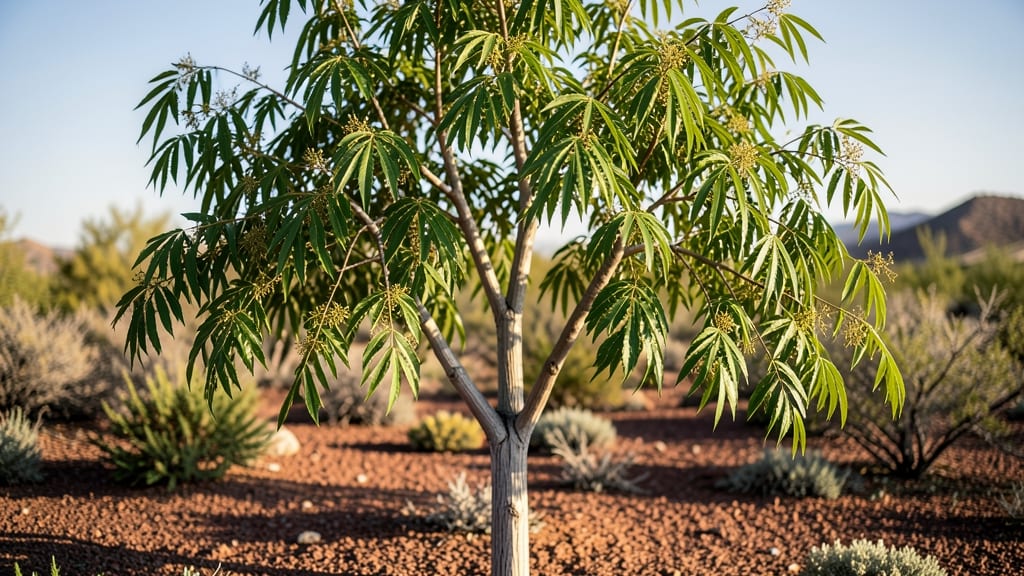
Planting a Fan Tex ash tree in Arizona means choosing a native survivor that thrives where others fail. 🌵 These drought-resistant trees—whether Fremont ash or Texas ash—handle the Southwest’s brutal sun, poor soil, and water restrictions like a champ, but pruning them wrong can turn your shade tree into a brittle skeleton.
I’ve watched my own Fan Tex ash go from scraggly to sturdy by mastering the right cuts, and the difference in growth (and survival) is night and day.
The key is structured pruning—not just hacking away branches. Start by removing dead wood first (those gray, brittle limbs that snap in the wind), then thin out crowded branches to let sunlight hit the trunk.
Arizona’s dry air means cuts heal faster than in humid climates, so you can prune heavier in late winter or early spring. Just avoid summer pruning—those cuts ooze sap like crazy, and the tree wastes energy trying to recover.
What you’ll end up with is a tree that stays shade-providing, pest-resistant, and water-wise for decades. My Fan Tex ash now throws shade over my patio in 100°F heat while using half the water of a non-native species.
The secret? Pruning to encourage a strong central leader (one main trunk) and keeping branches at least 12 inches from the ground to prevent rot.
Works for both Fremont ash (the classic Southwest native) and Texas ash (a close cousin that handles heat similarly). Here’s how to do it without turning your tree into a fire hazard—because in Arizona, that’s the real test of a good pruner.
📚 In This Guide
- What you need
- Instructions
- Tips and common mistakes
- Wrapping up and next steps
What you need
- ● Pruning shears: Bypass pruners (for small branches, ¼"–¾" diameter). Example: Felco F-2 or Corona Tools.
- ● Loppers: For medium branches (¾"–2" diameter). Example: Fiskars X27 or Bahco.
- ● Pruning saw: Curved-tooth saw for thick branches (2"+). Example: Fiskars X7 or Husqvarna.
- ● Extension pole: 6–10 ft telescoping pole with saw attachment (for high branches).
- ● Disposable gloves: Heavy-duty work gloves (nitrile-coated for grip and protection).
- ● Rubbing alcohol or bleach: 70% isopropyl alcohol or 10% bleach solution (to sterilize tools between cuts).
- ○ Tree wound dressing (optional): Pruning sealant (controversial but useful for large cuts in arid climates).
- ● Heavy-duty trash bags: 30–50 gallon capacity (for debris disposal).
- ● Ladder: Sturdy, extendable ladder (rated for your tree’s height + 3 ft extra). Safety tip: Use stabilizers!
- ● Timing: Prune during dormant season (late fall/winter) or early spring (before new growth). Avoid summer heat!
- ● Weather check: Wait for a cool, dry day (no rain forecast for 24 hours).
- ● Safety gear: Safety glasses, long sleeves, and closed-toe shoes (ash trees can be aggressive!).
- ● Local regulations: Check Arizona’s urban forestry guidelines or HOA rules if applicable.
- ● Water source: Hose or bucket (to clean tools and rinse off sap).
- ● 💡 Hydrate first: Water the tree 24 hours before pruning to reduce stress (critical in drought-prone areas!).
- ● 🌡️ Avoid over-pruning: Never remove more than 25% of the canopy in one session.
- ● 🔥 Watch for disease: Fan Tex Ash is susceptible to ash dieback—inspect for wilting or discolored leaves post-prune.
Instructions for pruning Fan Tex ash trees in Arizona’s harsh climate
Here’s how to keep your Fan Tex ash thriving in Arizona’s extreme heat and drought—without overstressing the tree.
✂️ Step 1: Time Your Pruning for Maximum Recovery
Prune your Fan Tex ash in late winter or early spring, just as new growth begins but before the worst heat hits. This timing lets the tree heal before summer stress sets in. Avoid pruning in fall—new growth won’t harden off before winter, leaving it vulnerable to cold snaps.
Look for swollen buds along the branches as your signal. These indicate the tree is waking up from dormancy and ready to handle pruning. If you miss this window, wait until late summer—but only if necessary—because late pruning can encourage tender growth that struggles in Arizona’s heat.
✂️ Step 2: Remove Dead, Diseased, or Weak Branches First
Start by cutting out dead, diseased, or crossing branches—these are the biggest threats to your tree’s health. Use clean, sharp pruners to make cuts just outside the branch collar (the swollen area where the branch meets the trunk). This ensures the wound seals properly and reduces the risk of infection.
If a branch is larger than 4 inches in diameter, use a pruning saw instead. Make the cut at a 45-degree angle on the underside of the branch, about 1/4 inch above a lateral branch or bud. This encourages faster healing and directs new growth in the right direction.
✂️ Step 3: Thin the Canopy for Better Airflow and Light
Fan Tex ash trees need good airflow to prevent fungal diseases like powdery mildew, which thrives in Arizona’s humidity. Remove 10-20% of the canopy by selectively cutting back branches that are rubbing against each other or growing inward. Focus on sparse areas to open up the tree’s interior.
When thinning, never remove more than 25% of the foliage in one season—this can shock the tree, especially in drought conditions. Step back occasionally to check your progress. The goal is a balanced, open canopy that lets sunlight reach the lower branches while still providing shade.
✂️ Step 4: Shape the Tree for Southwest Survival
Arizona’s intense sun and wind demand a strong, upright structure. Avoid heavy topping (cutting back the top of the tree), as this encourages weak, water-sprout growth that’s prone to breaking. Instead, prune to maintain the tree’s natural shape while removing any branches growing at sharp angles or downward.
Pay special attention to water sprouts—fast-growing, vertical shoots that steal energy from the rest of the tree. Cut these back to just above a lateral bud to redirect growth into stronger, more stable branches. This step is critical for keeping your Fan Tex ash sturdy in high winds.
💧 Step 5: Post-Pruning Care for Drought Resilience
After pruning, water deeply but infrequently to encourage deep root growth. Aim for 1-2 inches of water per week, either from rainfall or irrigation, and avoid shallow watering that keeps roots near the surface. Mulch around the base with 2-3 inches of organic mulch (like wood chips) to retain moisture and regulate soil temperature.
Monitor the tree for signs of stress like yellowing leaves or wilting branches. If you see these, reduce watering slightly—overwatering in the desert is just as harmful as underwatering. A well-pruned Fan Tex ash should bounce back within 4-6 weeks, with new growth appearing along the pruned branches.
Tips & tricks for pruning Fan Tex ash trees in Arizona
Here’s what I’ve learned after years of working with Fan Tex ash trees in the Southwest—these tricks will help you avoid common mistakes and keep your tree thriving.
Timing is Everything: If you’re unsure about the exact timing in late winter/early spring, check for swollen buds as your cue. These buds are nature’s way of telling you the tree is ready to handle pruning. In my experience, waiting until buds are visibly swollen but before they burst open gives the best results. For late summer pruning (if absolutely necessary), aim for early August when the monsoon season has passed but before the extreme heat of September.
Tool Prep Matters: Before you start cutting, sharpen your pruners and saws—dull tools crush branches instead of making clean cuts. I always wipe down tools with rubbing alcohol between cuts to prevent spreading disease. For branches over 4 inches, a pruning saw with a fine-tooth blade works best to avoid tearing the bark. Remember, clean cuts heal faster and look better than jagged ones.
Visual Canopy Check: When thinning the canopy, step back every few cuts to visualize the tree’s shape. You’re aiming for sunlight to reach all the way to the ground while maintaining that balanced, open structure. I like to imagine the tree as an umbrella—you want it to provide shade without blocking all light from the lower branches. This also helps prevent fungal issues that thrive in dense, shaded canopies.
Post-Pruning Observation: After you’ve finished pruning, mark your calendar for 4-6 weeks later. This is when you should see new growth emerging from the pruned areas. If you don’t see any new buds after this time, it might indicate stress—check your watering schedule or soil conditions. I’ve found that keeping a simple log of pruning dates and weather conditions helps track the tree’s recovery over time.
Pro Tips for Fan Tex Ash Tree Arizona
- Here’s what I’ve learned after years of working with Fan Tex ash trees in the Southwest—these tricks will help you avoid common mistakes and keep your tree thriving.
- Timing is Everything: If you’re unsure about the exact timing in late winter/early spring, check for swollen buds as your cue.
- Tool Prep Matters: Before you start cutting, sharpen your pruners and saws—dull tools crush branches instead of making clean cuts.
Frequently asked questions
Got questions about pruning your Fan Tex Ash Tree in Arizona’s harsh climate? You’re not alone! Here are answers to the most common concerns—from timing to troubleshooting—so you can keep your tree thriving in the Southwest’s dry heat.
When is the best time to prune a Fan Tex Ash Tree in Arizona?
The ideal window is late winter to early spring (February–March), just before new growth starts. Avoid pruning in summer’s extreme heat or during monsoon season (June–September) to prevent stress. Pro tip: Prune on a cool, overcast day to reduce water loss and shock.
How much of the tree can I safely remove during pruning?
For a Fan Tex Ash, aim to remove no more than 25% of the canopy per year. Over-pruning weakens the tree and stresses it in Arizona’s drought conditions. Focus on dead, diseased, or crossing branches first—these are the biggest threats to your tree’s health.
Do I need to water my Fan Tex Ash after pruning?
Yes! Pruning creates open wounds, and Arizona’s dry air accelerates moisture loss. Water deeply 2–3 times per week for the first month post-prune. Use a drip irrigation system to deliver water directly to the roots—this mimics natural rainfall and reduces evaporation.
What should I do if my Fan Tex Ash shows signs of stress after pruning?
Watch for yellowing leaves, wilting, or excessive leaf drop—these are red flags. If you see them, reduce watering temporarily (unless soil is bone-dry) and apply a mulch layer (2–4 inches) around the base to retain moisture. Avoid fertilizing until the tree shows new growth.
Are there alternatives to pruning if my tree is already struggling?
If your Fan Tex Ash is severely stressed, consider cultural adjustments first: improve soil drainage, adjust watering practices, or consult an arborist certified in Arizona’s climate. In extreme cases, root-pruning (selectively trimming roots) can stimulate healthier top growth—but this is advanced and best left to professionals.
Still unsure? Bookmark this guide or save it for later—your Fan Tex Ash will thank you with years of drought-resistant beauty!
Wrapping up and next steps
Mastering the art of pruning your Fan Tex Ash Tree in Arizona isn’t just about keeping it looking sharp—it’s a lifeline for its survival in the harsh Southwest climate.
By following the right techniques, you’ll ensure your tree thrives even during droughts, all while reducing fire risks and promoting healthy growth. 🌵✨
Now that you’re armed with the knowledge, roll up your sleeves and get pruning! Start with a quick assessment of your tree’s health, gather your tools, and tackle those branches with confidence.
Need a refresher? Bookmark this guide or share it with fellow Arizona gardeners—because every well-pruned tree helps the community (and the planet) breathe easier! 🌳💚