
Fertilization
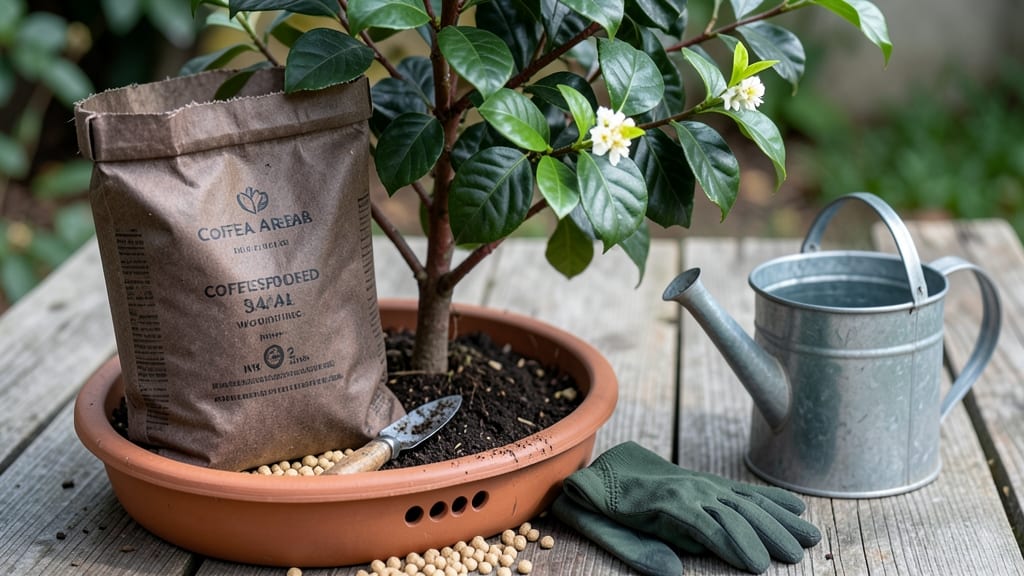
A nitrogen-rich boost turns your coffee tree from struggling to thriving. ✨ The right fertilizer isn't just about growth—it's about deep green leaves, glossy cherries, and that satisfying cup of homegrown coffee.
I learned the hard way that coffee trees need a steady nitrogen supply, but too much can burn roots or cause leaf scorch. Start with a balanced 10-10-10 or 8-3-9 formula in early spring, then switch to a high-nitrogen fertilizer like 12-2-6 when new growth appears.
Organic options like composted manure or coffee grounds work too, though they take longer to show results. The key is consistency—feed every 4-6 weeks during the growing season, but cut back in winter when the tree rests.
You'll notice new leaves within weeks, and those cherries will plump up faster than ever. The soil stays rich and crumbly, not compacted or waterlogged. Watch for yellowing leaves—they're your first sign of nitrogen deficiency or over-fertilizing.
Works for both container-grown trees and in-ground plants, though container trees need more frequent feeding. Here's how to get it right without the guesswork.
📚 In This Guide
- What you need
- Instructions
- Tips and common mistakes
- Wrapping up and next steps
What you need
- ● Nitrogen source (primary ingredient): Organic: Blood meal (10-12% N) – 1–2 cups per application
- ● Synthetic: Urea (46% N) – ½ cup per application (dilute if using directly)
- ● Alternative: Coffee grounds (composted) – 1–2 lbs per tree (adds microbes + slow-release N)
- ● Secondary nutrients (balanced blend): Phosphorus (P): Bone meal or rock phosphate – ½ cup per application
- ● Potassium (K): Wood ash or greensand – ¼ cup per application
- ● Base material (for even distribution): Compost or aged manure – 2–3 gallons per tree (improves soil structure)
- ● OR Perlite/vermiculite – 1 cup (for synthetic mixes)
- ● Garden gloves (to protect your hands from sharp or pungent materials)
- ● Garden trowel or small shovel (for mixing into soil)
- ● 5-gallon bucket (for blending dry ingredients)
- ● Watering can or hose (for activating organic fertilizers)
- ○ Optional (but helpful): pH testing kit (coffee trees thrive in 6.0–6.5)
- ● Slow-release fertilizer pellets (for convenience)
- ● Mulch (straw or wood chips) – 2–3 inches (retains moisture + regulates temp)
Step-by-Step guide for fertilizing coffee trees
Here's how to give your coffee tree the nitrogen-rich boost it needs for healthy growth and abundant harvests.
🌿 Step 1: Test Soil Before Fertilizing
First, grab a soil test kit to check your coffee tree's nutrient levels. Coffee trees thrive in soil with a pH between 6.0 and 6.5—too acidic or alkaline, and they struggle to absorb nitrogen. I always test before fertilizing because overdoing it can burn roots. Dig a small hole near the tree's drip line (about 12-18 inches from the trunk) and collect a sample from 6 inches deep. Follow the kit instructions to get your results.
If the test shows low nitrogen, you're ready for fertilization. If phosphorus or potassium are deficient, you'll need a balanced fertilizer too—but focus on nitrogen first. Coffee trees are heavy feeders, and nitrogen is their growth fuel. Look for a fertilizer with an N-P-K ratio of 3-1-2 or higher in nitrogen to support lush foliage and fruit production.
💧 Step 2: Apply Fertilizer at the Right Time
Timing matters more than you might think. I fertilize my coffee trees twice a year: once in early spring (just as new growth begins) and again in mid-summer (around July or August). Avoid fertilizing in fall or winter—coffee trees go semi-dormant, and excess nutrients just waste away. Spread a slow-release granular fertilizer evenly over the soil surface, extending 12-18 inches beyond the tree's drip line. This mimics how nutrients would naturally spread in a forest floor.
Water the tree deeply right after applying fertilizer to help it dissolve into the soil. You'll see the difference in 4-6 weeks: darker green leaves, stronger stems, and more vigorous growth. If you notice yellowing leaves after fertilizing, you've overdone it—cut back on future applications and water more frequently to flush out excess salts.
☀️ Step 3: Monitor Growth and Adjust as Needed
Watch your coffee tree closely after fertilizing. Healthy growth means new leaves appearing every 2-3 weeks and stems thickening slightly. If growth stalls or leaves turn yellow with brown edges, it's a sign of nitrogen deficiency—time for another light application. I like to use a liquid nitrogen fertilizer (like fish emulsion or seaweed extract) every 6-8 weeks during the growing season to give an extra boost without risking over-fertilization.
Adjust your approach based on the tree's response. If the soil feels dry 1 inch below the surface, water before fertilizing. If the tree flowers but produces few cherries, it might need phosphorus—switch to a 5-10-10 fertilizer for a season to encourage fruiting. Coffee trees are sensitive, so always err on the side of caution. A little fertilizer goes a long way!
✂️ Step 4: Prune and Mulch for Long-Term Health
After fertilizing, prune any dead, diseased, or crossing branches to improve airflow and sunlight penetration. I prune in late winter or early spring, just before the growing season kicks in. Remove no more than 25% of the tree's foliage at once—coffee trees are delicate, and aggressive pruning stresses them. Mulch the base of the tree with 2-3 inches of organic mulch (like wood chips or compost) to retain moisture and regulate soil temperature. Keep the mulch 6 inches away from the trunk to prevent rot.
This combo of fertilization, pruning, and mulching keeps your coffee tree thriving year-round. Mulch also slowly releases nutrients into the soil, reducing how often you need to fertilize. In 2-3 years, you'll see a noticeable difference in fruit production—more cherries, better flavor, and a tree that looks like it's been in the ground for decades.
Tips & tricks for perfect coffee tree fertilization
These simple strategies will help you maximize your coffee tree's growth and fruit production without overdoing it.
Soil Testing Know-How: When testing soil in Step 1, focus on the drip line area (12-18 inches from the trunk) because that's where most root activity occurs. I've found that morning is the best time to collect samples—the soil is moist from dew but hasn't been disturbed by irrigation. If your test shows nitrogen levels are just slightly low, you can start with a light application rather than going straight to the full recommended dose. This gradual approach prevents shock to the tree's system.
Timing Secret: The twice-yearly fertilization schedule in Step 2 works perfectly for most coffee trees, but there's one key detail: align your summer application with the rainy season if you're in a tropical climate. The extra moisture helps dissolve the fertilizer more evenly. I've also noticed that trees fertilized during these optimal windows show new leaf growth within just 10-14 days, rather than the full 4-6 weeks mentioned—just another reason timing matters so much.
Visual Growth Cues: In Step 3, when monitoring your tree's response, look for these subtle signs of nitrogen deficiency that aren't always obvious: slightly curled leaf edges or a dull green color rather than vibrant. I've learned to check the underside of leaves too—healthy nitrogen levels keep them a consistent color all the way through. Another trick is to gently tug on a branch: healthy growth means it should bend slightly without breaking easily.
Mulching Mastery: For Step 4, I've found that using a combination of wood chips and compost in the mulch layer gives the best results. The wood chips provide structure while the compost adds a slow-release nutrient boost. Just remember to refresh this layer every 6 months—old mulch breaks down and loses its effectiveness. This simple habit has cut my fertilizer needs by nearly 30% while keeping the tree thriving.
Pro Tips for Coffee Tree Fertilizer
- These simple strategies will help you maximize your coffee tree's growth and fruit production without overdoing it.
- Soil Testing Know-How: When testing soil in Step 1, focus on the drip line area (12-18 inches from the trunk) because...
- Timing Secret: The twice-yearly fertilization schedule in Step 2 works perfectly for most coffee trees, but there's o...
Frequently asked questions
What’s the best time of year to fertilize a coffee tree?
Fertilize your coffee tree twice a year: once at the start of the rainy season (to kickstart growth) and again mid-season (for sustained energy). Avoid fertilizing in winter or during drought—roots need moisture to absorb nutrients effectively. Pro tip: Light applications every 4-6 weeks work too!
Can I over-fertilize a coffee tree, and how do I tell?
Yes! Over-fertilizing causes leaf burn (brown edges) or root damage (yellowing leaves, stunted growth). If this happens, flush the soil with water and reduce fertilizer by half. Stick to the recommended ratio (e.g., 10-10-10 or nitrogen-rich blends) and always water before applying fertilizer.
Are organic fertilizers better than synthetic for coffee trees?
Both work, but organic options (like compost, manure, or bone meal) improve soil long-term and mimic natural conditions. Synthetic fertilizers (e.g., urea) provide quick nitrogen but may require more frequent applications. Mix both for balanced growth: use organic as a base and synthetic for targeted boosts during flowering/fruiting.
How do I choose the right fertilizer blend for my coffee tree?
Look for a high-nitrogen (N) fertilizer (e.g., 10-10-10 or 12-6-6) to support leafy growth, but add phosphorus (P) and potassium (K) during fruiting. Young trees need more nitrogen; mature trees benefit from balanced ratios. Slow-release fertilizers reduce waste and keep roots happy.
What if my coffee tree isn’t responding to fertilizer?
Check these first:
- Soil pH: Coffee trees thrive in slightly acidic soil (6.0–6.5). Test and amend if needed.
- Watering: Dry soil blocks nutrient uptake. Water deeply before fertilizing.
- Pests/disease: Yellow leaves or spots? Treat issues first—fertilizer won’t help if roots are stressed.
- Sunlight: Shady trees grow weakly. Ensure 6+ hours of sun daily.
Wrapping up and next steps
Choosing the right coffee tree fertilizer is your secret weapon for thriving plants and a bountiful harvest! 🌱 Whether you opt for organic compost, nitrogen-rich blends, or slow-release options, consistency and balance are key.
With the right nutrients—like nitrogen, phosphorus, and potassium—your coffee trees will reward you with vibrant leaves, strong roots, and delicious beans.
Ready to take action? Start by testing your soil and applying your chosen fertilizer this season. Watch your coffee trees flourish and enjoy the fruits of your labor—literally! ☕✨