
Trees
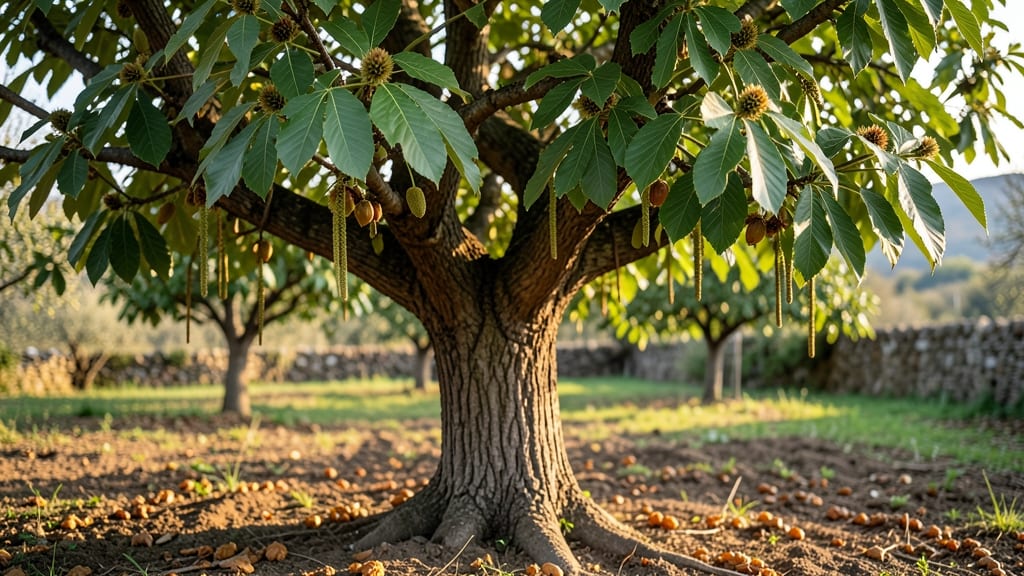
Identifying big green tree nuts means spotting hickory or pecan varieties, with their glossy, elongated shells and oval shapes before the husks split open. These nuts reveal hard brown shells when fully ripe in late summer or fall.
These nuts aren't just visually striking—their green husks actually contain tannins that protect the developing nut inside. 🌿 Hickory nuts tend to have more elongated, ribbed shells compared to pecans' smoother, rounded shapes, though both start green before turning brown.
I always check for the husk's split pattern: pecans typically open from the bottom up, while hickory nuts may show more irregular cracks.
Timing matters too—waiting too long can mean the nut inside has already started drying out or attracting pests. The best time to harvest is when about 70% of the husks have split open but before they turn completely brown.
For preservation, spread them on trays in a dry, shaded area for 2-3 weeks, stirring occasionally to prevent mold.
💡 In This Article
- Visual and Physical Traits of Common Large Green Tree Nuts
- Best Ways to Harvest and Preserve Big Green Tree Nuts
Visual and physical traits of common large green tree nuts
The green color of tree nuts like hickory and pecan comes from tannins—natural compounds that act as a protective barrier against pests and environmental stress.
These tannins create a glossy, almost waxy texture on the husk, making it feel slightly rubbery to the touch. 🌿 Underneath this green exterior lies the hard shell, which starts as a pale green but darkens to a rich brown as the nut matures.
Pecan shells are smoother and more oval-shaped, while hickory shells often have visible ridges or grooves running along their length.
Leaf patterns offer another clue: pecan trees have compound leaves with 7-17 leaflets arranged alternately, while hickory leaves typically have 5-9 leaflets in pairs.
The tree structure also differs—pecan trees grow more horizontally with spreading branches, whereas hickory trees have a more upright, conical shape. 🌳 When the husks split, pecans usually separate cleanly from the bottom, revealing the nut inside, while hickory husks may tear irregularly.
The size difference is noticeable too: pecans average 1.5-2 inches long, while hickory nuts can reach 2-3 inches or longer.
What happens inside is equally fascinating. The green husk contains up to 15% moisture when fresh, which gradually evaporates during the drying process. This moisture loss is crucial—if you harvest too early, the nuts won't dry properly and may develop mold.
The tannins in the husk also play a role in preserving the nut's freshness by inhibiting bacterial growth. 🔬 This natural preservation is why you'll often find wild pecans and hickory nuts still viable even after falling to the ground.
One common mistake is confusing walnuts with these species, but walnut husks are typically more fibrous and less glossy, with a more rounded shape. Walnut leaves also have serrated edges, unlike the smooth or slightly toothed edges of pecan and hickory leaves.
The green husks of walnuts are more papery and less fleshy than those of pecans or hickories. 🌿 For example, a pecan husk might feel like a thick, leathery glove, while a walnut husk is closer to a thin, dry paper shell.
Seasonal changes also affect identification. In early summer, the husks are bright green and tightly closed, while by late summer, they begin to split and turn brown.
The timing of this split is critical—if you wait too long, the nuts may fall to the ground and become contaminated with dirt or pests. The ideal harvest window is when 50-70% of the husks have split open but before they start to dry completely on the tree.
Consider these key visual traits when identifying:
- Husk color: Bright green when fresh, turning brown as it dries
- Shell shape: Pecan (smooth, oval), hickory (ridged, elongated)
- Leaf pattern: Pecan (7-17 leaflets), hickory (5-9 paired leaflets)
- Tree structure: Pecan (spreading branches), hickory (upright, conical)
- Texture: Glossy, rubbery husk with tannins
Understanding these traits helps you distinguish between species and ensures you harvest at the perfect time for the best flavor and preservation. 💫