
Pruning
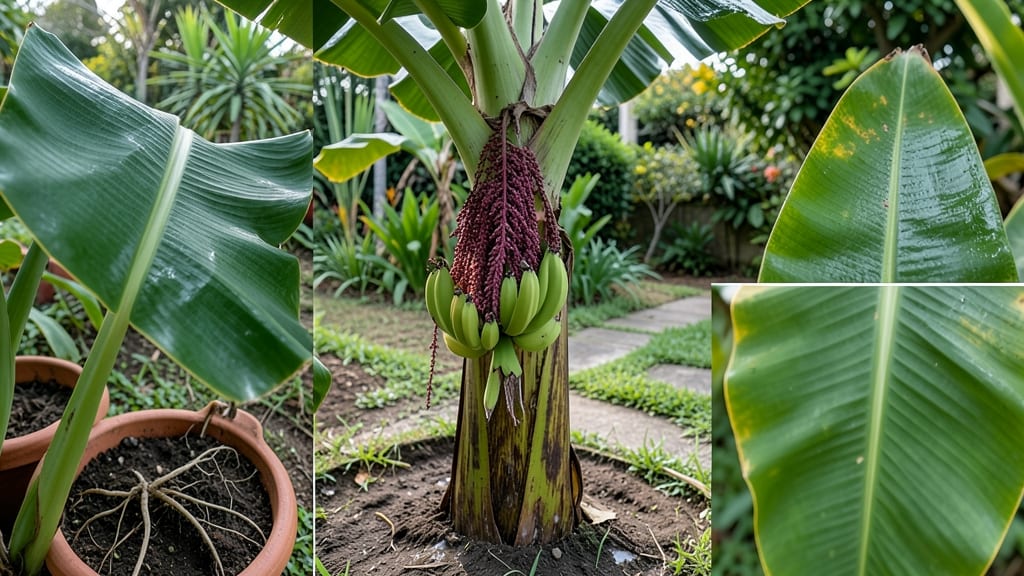
The banana tree adaptations that make them thrive in heat and humidity can also work wonders in smaller spaces—dwarf varieties like 'Dwarf Cavendish' and 'Lady Finger' prove you don’t need a jungle to grow them. 🌿 These compact plants adapt beautifully to containers, patios, or even sunny windowsills, as long as you mimic their tropical roots with warmth, moisture, and shelter from cold snaps.
The key to their success lies in understanding their natural adaptations: they crave 60-80°F temperatures, high humidity, and well-draining soil that mimics their rainforest home.
In cooler climates, grow them in pots you can roll indoors when temperatures dip below 50°F—a trick that’s saved my plants from frost damage for years. Their large leaves also help them capture sunlight efficiently, so even partial shade works if you keep them hydrated.
With the right setup, you’ll watch them grow 3-5 feet tall in a single season, producing sweet fruit even in small spaces. The secret is consistency: water deeply when the top inch of soil dries, feed monthly with banana-specific fertilizer, and prune dead leaves to encourage new growth.
These adaptations aren’t just for pros—anyone can recreate them with a little planning.
Whether you’re in a warm zone or a chilly one, dwarf banana trees reward patience with year-round tropical vibes and unexpected harvests. Start small, experiment with containers, and soon you’ll have your own mini banana grove—no greenhouse required.
📚 In This Guide
- What you need
- Instructions
- Tips and common mistakes
- Wrapping up and next steps
What you need
- ● Dwarf banana plant: Choose a variety like Musa acuminata 'Dwarf Cavendish' or Musa velutina (hardy banana). (1 plant per container or in-ground spot)
- ● Well-draining potting mix: 50% coconut coir, 30% perlite, 20% compost (or a pre-mixed tropical blend). (10–20 lbs, depending on container size)
- ● Container (if not in-ground): Minimum 15-gallon pot (24" diameter) for dwarf varieties.
- ● Drainage holes (mandatory—banana roots hate soggy feet!).
- ● Self-watering pot (for convenience, especially in dry climates).
- ● Slow-release fertilizer: Balanced 10-10-10 or banana-specific formula (e.g., Espoma Organic Banana Fertilizer). (1 lb per plant, applied 2x/year)
- ● Mulch: Straw or wood chips (2–3 inches thick) to retain moisture and regulate temperature.
- ● Gloves (heavy-duty for handling pseudostems—they’re spiky!).
- ● Pruning shears (sterilized, sharp blades for clean cuts).
- ● Trowel or transplant spade (for repotting or in-ground planting).
- ● Watering can or hose with gentle spray nozzle (banana trees hate waterlogged roots!).
- ○ pH test kit (ideal soil pH: 5.5–7.0). (Optional but helpful for troubleshooting yellow leaves.)
- ● Sunlight assessment: Confirm 6+ hours of direct sun daily (dwarf varieties tolerate partial shade but thrive in full sun).
- ● Cold-hardiness prep (zones 8–11): Burlap wrap for winter protection.
- ● Greenhouse or cold frame (for zones below 8).
How to adapt banana trees for small spaces and year-round growth
Dwarf banana varieties thrive in tight spaces and mild climates—here’s how to coax them into lush, productive growth.
🌱 Step 1: Select the Right Dwarf Variety for Your Space
Choose compact dwarf varieties like Dwarf Cavendish or Lady Finger—these stay under 10 feet tall and produce fruit in 1-2 years instead of the 3-5 years of standard types. Look for nursery-grown plants with multiple pseudostems (the layered trunks) to ensure maturity. Avoid runts with only one stem; they’ll struggle to fruit.
Check the plant’s leaf size and spacing—healthy dwarf bananas have 6-8 inch leaves spaced 4-6 inches apart along the pseudostem. If leaves are sparse or yellowing, the plant may be stressed or diseased. I always inspect the base for red spider mites or sap-sucking insects before bringing a banana tree home.
☀️ Step 2: Position for Optimal Light and Shelter
Dwarf bananas need full sun (6+ hours daily) but can scorch in intense afternoon heat above 90°F. Place them in partial shade during peak summer hours if your climate runs hot. A south-facing window works for indoor growing, but supplement with a grow light for 12-14 hours daily—bananas are light-hungry.
Protect from wind and cold drafts—even dwarf varieties wilt below 55°F. Use a frost cloth or move potted plants indoors when night temps drop. I’ve seen banana trees recover from light frost, but blackened leaves mean the plant’s done for the season. Mulch heavily in winter to insulate roots.
💧 Step 3: Mimic Tropical Rainfall with Smart Watering
Bananas love consistent moisture but hate soggy roots. Water when the top 2 inches of soil feel dry—stick your finger in; if it’s damp, wait. In pots, this means 2-3 times weekly in summer, less in winter. Overwatering causes root rot, which turns leaves yellow and mushy at the edges.
Mist leaves daily in dry climates to replicate humidity. I use a rainwater collection system to avoid chlorinated tap water, which can stress the plant. Fertilize monthly with a balanced 10-10-10 mix during growing season (spring-fall) to encourage flowering. Stop fertilizing in winter—bananas rest then.
✂️ Step 4: Prune and Support for Compact Growth
Remove dead or yellowing leaves at the base to redirect energy to new growth. Cut 1 inch above the pseudostem with sterilized pruners—never tear leaves, or you’ll damage the plant. If a pseudostem finishes fruiting, cut it at the base to make room for new shoots.
Stake tall varieties with bamboo supports to prevent leaning. Tie stems loosely with soft plant ties every 12 inches. I’ve seen bananas grow 3 feet in a season—without support, they flop over. Harvest only when fingers are fully yellow (green ones won’t ripen off the plant).
🪴 Step 5: Overwinter and Repot for Long-Term Health
Before winter, reduce watering and move pots to a garage or unheated shed if temps drop below 50°F. Wrap the pot in bubble wrap to protect roots. In spring, repot every 2-3 years into a 2-inch larger container with fresh potting mix—bananas outgrow their pots fast.
Divide crowded clumps in early spring by separating pseudostems with a sterilized knife. Each division needs at least 2-3 stems to thrive. I’ve successfully propagated banana trees this way—just ensure new pots have drainage holes and well-draining soil. With patience, you’ll have multiple plants from one.
Tips & tricks for perfect dwarf banana tree adaptations
Between us, adapting banana trees for small spaces isn't just about choosing the right variety—it's about creating the perfect microclimate. Here's what I've learned after years of growing these tropical beauties in less-than-ideal conditions.
Variety Selection Secret: When inspecting nursery plants, look beyond just the height—focus on the leaf color and texture. Healthy dwarf banana leaves should be a vibrant deep green with no brown edges or spots. The 6-8 inch leaves should be firm to the touch, not limp or papery. I once bought a plant with yellowing leaves that looked fine at first glance, only to watch it decline within weeks. That's when I learned to trust my eyes over the sales pitch.
Light Management Strategy: The 6+ hours of sunlight requirement is non-negotiable, but how you provide it matters. For indoor growers, position your banana tree within 3 feet of a south-facing window during winter months when sunlight is weaker. If you notice leaves stretching toward the light (a condition called etiolation), it's time to supplement with a grow light. I use a full-spectrum LED grow light on a timer for those 12-14 hours daily—this mimics natural daylight cycles and prevents leggy growth.
Watering Wisdom: The top 2 inches dry rule works, but here's the trick: use your finger to check moisture at multiple points in the pot. Banana trees have a sneaky habit of staying damp on top while their lower roots suffer. In summer, I water in the early morning to prevent evaporation and fungal issues. And never water from above—always water at the base to keep those beautiful leaves dry and prevent disease. The 2-3 times weekly guideline is just that—a guideline. Adjust based on your specific climate and pot size.
Pruning Precision: When removing dead leaves in Step 4, don't just cut at the base—always leave that 1 inch above the pseudostem. This small detail prevents water from pooling against the trunk, which can lead to rot. I keep a small bottle of rubbing alcohol handy to sterilize my pruners between cuts. This might seem excessive, but banana trees are particularly susceptible to fungal infections through open wounds. Sterilization has saved me from losing plants to infections that started from simple pruning cuts.
Pro Tips for Banana Tree Adaptations
- Between us, adapting banana trees for small spaces isn't just about choosing the right variety—it's about creating th...
- Variety Selection Secret: When inspecting nursery plants, look beyond just the height—focus on the leaf color and tex...
- Light Management Strategy: The 6+ hours of sunlight requirement is non-negotiable, but how you provide it matters. Fo...
Frequently asked questions
Got questions about growing banana trees in small spaces? Here are some of the most common queries—and their answers—to help you thrive with your dwarf varieties!
How long does it take for a dwarf banana tree to bear fruit?
A dwarf banana tree typically takes 12–24 months to produce its first fruit after planting, depending on climate and care. In warmer regions, you might see bunches in as little as 10–12 months, while cooler areas may take longer. Patience is key—consistent watering and sunlight speed up the process!
Can I grow a banana tree indoors or in a container?
Dwarf varieties like Musa acuminata ‘Dwarf Cavendish’ thrive in large containers (15+ gallons) and can be moved indoors during winter if temperatures dip below 50°F (10°C). Place them near a sunny window or under grow lights. Just ensure proper drainage—root rot is their biggest enemy!
How do I protect my banana tree from frost?
Banana trees cannot tolerate frost, but dwarf varieties can survive light freezes (28°F/-2°C) with protection. Cover the plant with frost cloth or move potted trees indoors. For outdoor trees, mulch the base and wrap the trunk in burlap. If frost hits, prune damaged leaves in spring and fertilize to encourage regrowth.
Are there edible alternatives if my banana tree doesn’t produce fruit?
Yes! Even if fruiting fails, banana trees offer edible leaves, flowers, and pseudostems. Young leaves can be cooked like spinach, flowers (called banana blossoms) are a delicacy in Southeast Asian cuisine, and the heart (inner pseudostem) is eaten in some cultures. Just ensure the plant isn’t treated with pesticides if harvesting.
Why are my banana tree’s leaves turning yellow?
Yellowing leaves usually signal overwatering, nutrient deficiency, or fungal issues. Check the soil—it should be moist but not soggy. Yellow edges with brown spots? Likely fungal leaf spot; treat with copper fungicide. Uniform yellowing? Time for balanced fertilizer (high in potassium). Adjust care and monitor for improvement!
Wrapping up and next steps
From their compact growth habits to their resilience in varied climates, dwarf banana trees are nature’s genius in small-space gardening! 🌱 Their adaptations—like pseudostems for protection, rhizomes for regrowth, and large leaves for energy capture—make them perfect for year-round greenery, even in tight urban spots.
Whether you’re a beginner or a seasoned gardener, these hardy plants prove that big rewards come in small packages.
Ready to grow your own? Start by choosing a dwarf variety (like ‘Dwarf Cavendish’ or ‘Lady Finger’) and give it a sunny spot in your yard or balcony. Your green thumb is just a few inches of soil away! 🌟