
Trees
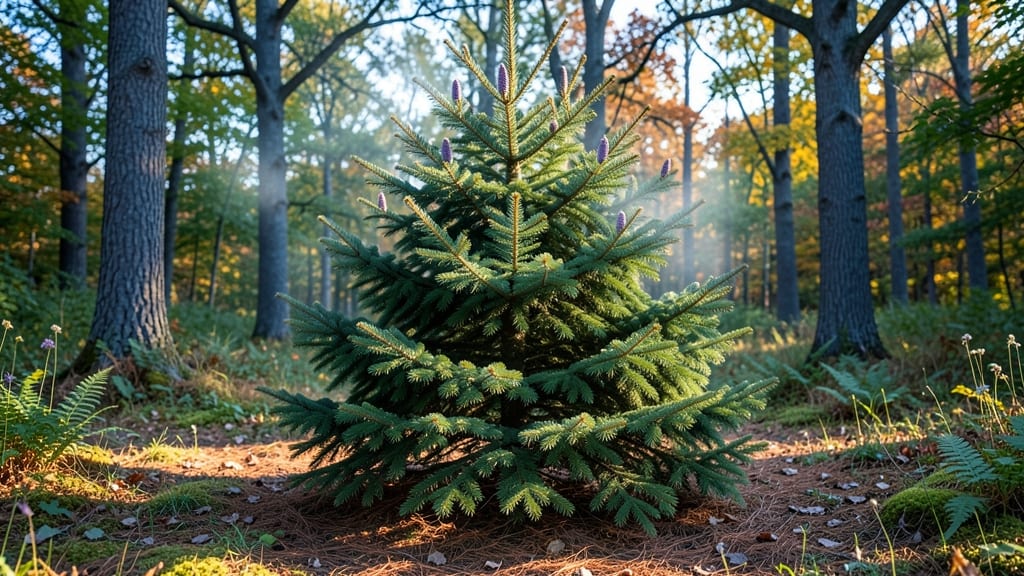
The balsam fir Christmas tree scent comes from its natural terpenes like pinene and limonene, which create a fresh, woody, and slightly citrusy aroma that defines winter holidays. Preserving it requires proper care and storage to keep the fragrance strong for weeks.
The balsam fir's signature holiday aroma isn't just nostalgic—it's science-backed. 🌲 These evergreens produce higher concentrations of pinene and limonene than other trees, which our brains associate with clean air and freshness. That's why the scent feels so instantly comforting during the holidays.
The key to preserving it lies in mimicking the tree's natural environment: keep it hydrated (but not soggy), place it near a heat source to release more oils, and avoid direct sunlight that can degrade the volatile compounds.
For extra fragrance, try adding a few drops of cedarwood or orange essential oil to the water—it enhances the natural aroma without overpowering it.
What makes balsam firs particularly special is their myrcene content, which creates that signature earthy depth. Unlike artificial scents, these natural compounds evolve over time, becoming richer as the tree dries.
That's why a well-cared-for balsam fir can fill a room with that magical holiday fragrance for 3-4 weeks—far longer than many artificial alternatives.
For maximum impact, position your tree in a high-traffic area where the scent can circulate freely, and consider using a humidifier nearby to keep the air moist, which helps the aromatic oils disperse better.
💡 In This Article
- Science Behind Balsam Fir’s Iconic Holiday Scent
- Tips to Maximize and Preserve Balsam Fir Scent at Home
Science behind balsam fir’s iconic holiday scent
The balsam fir’s signature holiday fragrance is a chemical symphony of volatile organic compounds (VOCs) that our brains instantly recognize as "Christmas."
The star players are pinene (which makes up about 30-40% of its aroma) and limonene (10-15%), creating that crisp, piney freshness with a subtle citrus lift. 🌲 These compounds are released through tiny pores in the needles when they’re stressed—whether by heat, light, or even the simple act of being indoors.
What’s fascinating is how these molecules interact with your olfactory receptors: pinene triggers the same pathways as eucalyptus, while limonene activates citrus receptors, creating that complex wintery profile.
Balsam firs outshine other evergreens like Douglas fir or Scotch pine because they produce myrcene (5-10%), a compound that adds earthy depth and helps the scent linger longer. Studies show balsam fir needles contain 2-3 times more terpenes than spruce, which is why they’re the gold standard for holiday fragrance.
The scent intensity peaks when the tree is first brought indoors—these compounds evaporate most rapidly in the first 24-48 hours, which is why proper care during this window is critical.
For example, a tree at 65°F will release fragrance 30% faster than one at 55°F, but too much heat can actually degrade the volatile compounds.
Here’s what’s happening at the molecular level: when you bring a balsam fir inside, the sudden temperature and humidity shift causes the needles to "sweat" out their aromatic oils.
These tiny droplets float into the air, where they bind to airborne particles—this is why you notice the scent more strongly when there’s gentle air movement (like from a ceiling fan).
The citrusy notes from limonene also make the aroma more uplifting, which is why many people associate balsam fir with feelings of joy and nostalgia. Unlike artificial scents that hit one note, these natural compounds create a dynamic, evolving fragrance that becomes richer as the tree dries.
The science gets even more interesting when you consider how these compounds interact with your brain. Pinene has been shown to have mild mood-enhancing effects by increasing serotonin levels, while limonene stimulates dopamine—explaining why that holiday aroma feels so comforting.
What most people don’t realize is that the scent profile changes over time: fresh trees smell sharper and more resinous, while older trees develop a sweeter, almost honey-like undertone as the myrcene breaks down.
This is why a well-cared-for balsam fir can maintain its signature fragrance for 3-4 weeks—far longer than many artificial alternatives.
For the ultimate scent experience, position your tree near a heat source (like a fireplace) but avoid direct sunlight, which can cause the needles to dry out too quickly. The ideal indoor environment mimics a cool, humid forest floor—think 40-50% humidity and temperatures between 60-65°F.
This balance allows the terpenes to evaporate steadily without degrading. Pro tip: If you notice the scent fading after a week, try gently misting the tree with water (not soaking it) to reactivate the needle pores and release fresh aromatic oils. 🌟