
Watering
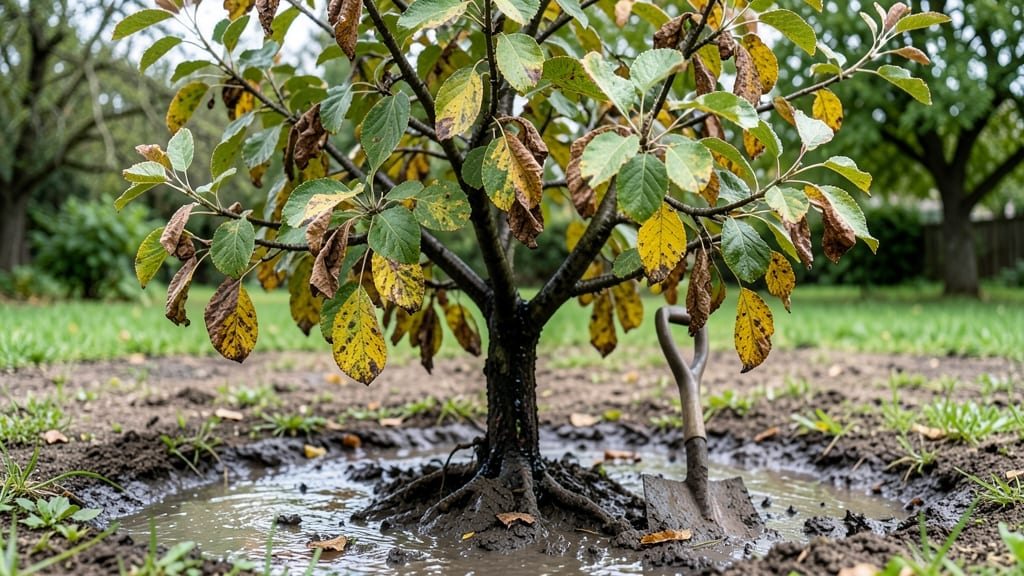
Overwatering your apple tree turns its leaves yellow and invites root rot—both signs I’ve seen too often in my own orchard. 🌱 The problem starts when soggy soil suffocates roots, cutting off oxygen and nutrients.
Yellowing leaves aren’t just a cosmetic issue; they’re a cry for help before the tree’s health spirals downward.
Most gardeners overwater because they assume more is better, but apple trees need deep, infrequent watering—about 1-2 inches per week, depending on rain. The real fix? Amending soil with compost to improve drainage and adjusting your watering schedule to match seasonal needs.
I’ve revived multiple trees by simply letting the top 2-3 inches dry out between waterings.
You’ll see new green growth within 2-4 weeks of proper care, and fruit production will rebound. The key is balance: keep roots moist but never waterlogged. Prune any mushy, discolored roots you find—they’re the first signs of rot—and focus on aerating compacted soil to prevent future issues.
Prevention is easier than rescue: monitor soil moisture with your finger (stick it in 2 inches deep), mulch to regulate moisture, and avoid watering late in the day. These small changes keep your apple tree thriving for years without the stress of yellow leaves or weak fruit.
Hidden Roots of Overwatering
When your apple tree’s leaves start yellowing or drooping, overwatering is often the sneaky culprit—especially when it’s not as obvious as standing water. Understanding the why behind this issue helps you fix it before it’s too late.
Let’s dig into the science and real-world triggers that turn your tree’s roots into a soggy mess.
Apple trees thrive in well-draining soil, but clay-heavy or compacted soil acts like a sponge, trapping excess water around the roots. When roots sit in soggy conditions for too long, they suffocate because:
- Oxygen depletion: Water fills soil pores, crowding out the oxygen roots need to respire. Without oxygen, roots can’t absorb nutrients or grow properly.
- Fungal infections: Stagnant water creates the perfect breeding ground for Phytophthora and other pathogens that cause root rot. These fungi clog root cells, blocking water and nutrient uptake.
- Salt buildup: Over time, dissolved minerals in water concentrate in the soil, creating a toxic environment. This is especially true in irrigated orchards or areas with hard water.
Actionable fix: Test your soil’s drainage by digging a 12-inch hole near the tree. Fill it with water—if it drains in less than 6 hours, your soil is fine. If it takes longer than 24 hours, amend with organic matter (compost, peat moss) or consider raised beds.
Automatic sprinklers, drip systems, or even well-meaning gardeners can drown apple trees without realizing it. Here’s how:
- Frequency vs. depth: Light, frequent watering keeps the topsoil wet but doesn’t encourage deep root growth. Apple trees need deep, infrequent watering (1–2 inches per week) to reach their roots 12–18 inches below the surface.
- Timing traps: Watering late in the day leaves foliage damp overnight, inviting fungal diseases like apple scab. Overhead sprinklers also waste water by evaporating before it reaches the roots.
- System malfunctions: A broken drip emitter or misaligned sprinkler head can create localized soggy spots while other areas dry out.
Actionable fix:
- Switch to drip irrigation placed at the tree’s drip line (not the trunk) for precise delivery.
- Water early morning (6–9 AM) to reduce evaporation and fungal risk.
- Use a rain gauge to track moisture—apple trees hate consistent wet feet.
Apple trees in pots or small root zones (like newly planted trees) are vulnerable to overwatering because:
- Limited escape: Containers lack the drainage depth of in-ground soil. Water pools at the bottom, leading to anaerobic conditions (no oxygen).
- Root circling: Roots growing in tight circles can’t expand, so they rot faster when overwatered. This is common in balled-and-burlapped trees.
- Material matters: Plastic pots trap heat and moisture, while terracotta “breathes” but may crack under pressure. Both can backfire if drainage isn’t perfect.
Actionable fix:
- Ensure containers have drainage holes + a cache pot (gravel at the bottom) to prevent soggy roots.
- Use well-draining potting mix (50% compost, 30% perlite, 20% sand). Avoid garden soil—it compacts.
- Check moisture with your finger: If the top 2 inches are dry, water slowly until it drains.
Not all apple trees get the same water treatment—microclimates (tiny weather zones) can turn your tree into a soggy disaster zone:
- Low spots: Water runs downhill, pooling near tree roots. Even a 1% slope can create a depression that holds excess moisture.
- High humidity: In rainy or foggy climates, soil stays damp longer, slowing evaporation. Apple trees in these areas need less frequent watering.
- Shade vs. sun: Shaded trees dry out slower because sunlight evaporates moisture. If your tree is under a canopy, it’s more prone to overwatering.
Actionable fix:
- Raised beds or berms (mounded soil) around the tree’s base can improve drainage in low spots.
- Mulch with wood chips (3–4 inches) to regulate soil temperature and reduce evaporation.
- Adjust watering based on local weather forecasts—skip watering if rain is predicted.
Overwatering isn’t just about how much you water—it’s about how well your tree’s environment supports drainage. By addressing these hidden triggers, you’ll give your apple tree the breathing room it needs to bounce back from yellowing leaves and root stress.
Revive Your Tree with These Fixes
Overwatering can turn your thriving apple tree into a sad, soggy mess—but don’t worry! With the right steps, you can nurse it back to health and prevent future disasters.
Below, we’ve mapped out practical solutions for each cause of overwatering damage, from yellowing leaves to root rot, plus pro tips to keep your tree happy and hydrated the right way.
If your apple tree’s leaves are turning yellow (especially on older growth) or wilting despite damp soil, it’s likely suffering from oxygen deprivation or nutrient leaching. Here’s how to turn things around:
🔥 Step 1: Stop Watering Immediately
- Pause all watering for at least 5–7 days to let the soil dry out. This prevents further root suffocation.
- Check soil moisture by sticking your finger 2–3 inches deep—if it’s still damp, wait longer.
🍳 Step 2: Improve Soil Drainage
Overwatering thrives in compacted or clay-heavy soil. Loosen the top 6–12 inches of soil around the tree’s drip line (the area directly under the canopy) using a garden fork or broadfork. This helps roots breathe.
- Add organic matter: Mix in compost, peat moss, or coconut coir to improve aeration and water retention without smothering roots.
- Raise the tree’s base (if in a depression): Mound soil or gravel around the trunk to encourage runoff.
👨🍳 Step 3: Adjust Your Watering Routine Apple trees hate soggy feet!
Switch to a deep-and-infrequent watering schedule: - Water deeply 1–2 times per week (depending on climate) instead of daily shallow drinks. - Water at the base, not the leaves, to avoid fungal diseases like apple scab. - Use a moisture meter to track soil dryness—aim for 40–60% moisture (not bone-dry, not soggy).
💡 Pro Tip: Mulch the Right Way
Apply 2–4 inches of mulch (wood chips, straw, or pine bark) around the drip line, but keep it 6 inches away from the trunk. Mulch helps regulate soil temperature and moisture—but too much can trap humidity and invite rot.
If your tree shows mushroom growth at the base, blackened roots, or a foul smell, root rot has set in. Act fast—this is a life-or-death situation for your apple tree.
🔪 Step 1: Prune Damaged Roots (Sterilize Tools!)
- Dig carefully around the root zone (1–2 feet deep) to inspect roots.
- Trim black, mushy roots with sterilized pruners—healthy roots are white or tan.
- Disinfect tools with rubbing alcohol between cuts to prevent spreading disease.
🌡️ Step 2: Improve Soil Aeration & Fungicide Treatment
- Replace soggy soil with a mix of 50% native soil + 50% perlite or coarse sand to improve drainage.
- Apply a fungicide like copper fungicide or mycorrhizal inoculant to combat pathogens.
Follow label instructions! - Avoid watering for 10–14 days to let the soil dry completely.
✨ Step 3: Support the Tree’s Recovery
- Reduce stress by pruning only dead or diseased branches (avoid heavy pruning now).
- Fertilize lightly with a balanced, slow-release fertilizer (10-10-10) only after roots show signs of recovery (new white root growth).
- Monitor for pests: Root rot weakens trees, making them vulnerable to borers or aphids.
🎯 Prevention Tip: Install a French Drain (For Severe Cases)
If your yard has poor drainage, consider a French drain (a buried perforated pipe surrounded by gravel) around the tree’s root zone to divert excess water.
Once your tree is on the mend, lock in these habits to keep it thriving:
| Mistake | Fix It With… | Prevent It By… |
|---|---|---|
| Watering on a schedule | Use a moisture sensor or stick your finger in the soil | Water only when the top 2–3 inches are dry |
| Compacted or heavy soil | Add organic matter or gypsum | Test soil drainage before planting |
| Over-mulching | Remove excess mulch, add gravel | Keep mulch 2–4 inches thick, 6" from trunk |
| Ignoring weather | Adjust watering for rain or heatwaves | Check local rainfall data weekly |
| Using the wrong hose/nozzle | Switch to a soaker hose or drip irrigation | Avoid sprinklers that wet leaves/fruit |
Final Thought: 🌟 Overwatering is reversible—but the key is patience and consistency. Your apple tree will bounce back with the right care, and you’ll soon be harvesting crisp, juicy fruit instead of dealing with yellow leaves. Stay vigilant, and your tree will thank you!
Frequently asked questions
How do I know if my apple tree is getting too much water?
Look for yellowing leaves (especially on older growth), wilting despite damp soil, or mushy, black roots when you dig near the base. If the soil smells foul or mushrooms appear at the trunk, root rot has likely set in from overwatering.
Can I save an apple tree with root rot caused by overwatering?
Yes, but act fast! Prune all black, mushy roots with sterilized tools, improve drainage by amending soil with perlite or sand, and avoid watering for 10–14 days to let roots recover. Apply a copper fungicide to combat pathogens.
What’s the best way to water an apple tree to avoid overwatering?
Use deep, infrequent watering—about 1–2 inches per week—and focus on the root zone, not the leaves. Water early morning (6–9 AM) to reduce evaporation and fungal risk. Check soil moisture by sticking your finger 2–3 inches deep.
Will mulch help or hurt my overwatered apple tree?
Mulch helps regulate moisture but can trap humidity if overused. Apply 2–4 inches of wood chips or straw around the drip line, keeping it 6 inches away from the trunk. Avoid piling mulch too thickly—it should never touch the base.
How long does it take for an apple tree to recover from overwatering?
With proper care, you’ll see new green growth within 2–4 weeks. Root recovery may take several months, especially if rot was severe. Monitor soil moisture closely and avoid stressing the tree with heavy pruning or fertilization during recovery.