
Trees
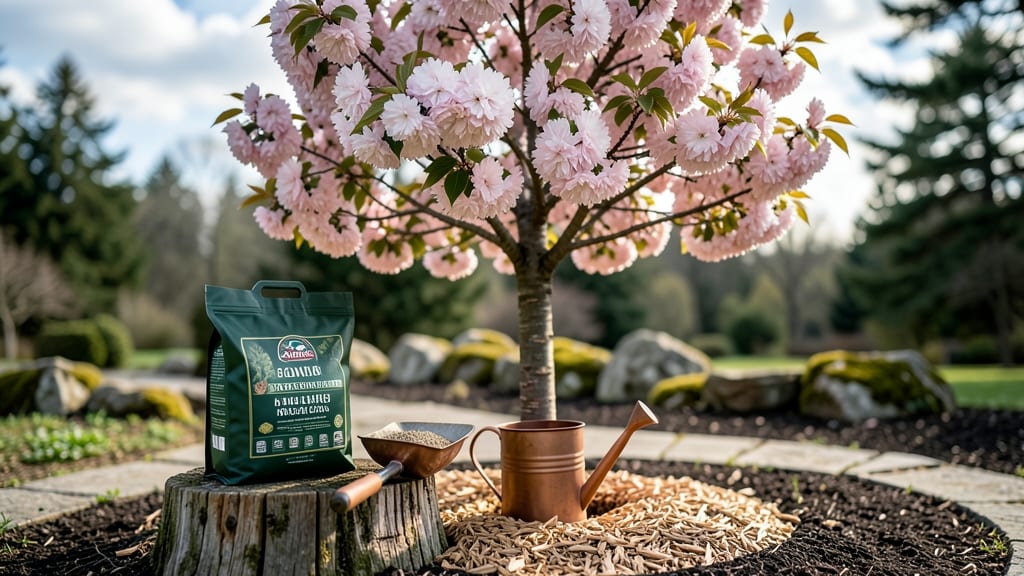
For Yoshino cherry tree fertilizer, use a balanced blend with higher nitrogen (N) like 10-10-10 or 12-6-6 to fuel spring blooms, applied twice yearly—once before buds open and again after flowering. Organic compost or fish emulsion work well for gradual nutrient release without risking overfeeding.
Yoshino cherry trees are heavy feeders, especially during their dramatic spring bloom phase when they demand nitrogen-rich fertilizer to support flower production. 🌸 The key is timing—early spring applications (before buds swell) jumpstart growth, while post-bloom feedings replenish nutrients spent on flowering.
I’ve seen firsthand how skipping this second feeding weakens next year’s blooms, so consistency matters. Organic options like compost or worm castings improve soil structure over time, while synthetic blends deliver quick results for showstopping displays.
One common mistake is overdoing phosphorus (P) or potassium (K), which can actually reduce flowering. These trees prefer a balanced approach, with nitrogen leading the way. For example, a 10-10-10 blend gives equal support to all three nutrients without overwhelming the tree.
Always check soil pH first—Yoshinos thrive in slightly acidic soil (6.0-6.5), where nutrients are most available.
💡 In This Article
- Understanding Yoshino Cherry Tree Nutrient Needs by Season
- Best Organic and Synthetic Fertilizers for Yoshino Cherry Trees
Understanding Yoshino cherry tree nutrient needs by season
Yoshino cherry trees follow a three-phase nutrient cycle that aligns with their growth stages. In early spring, when buds begin to swell, the tree prioritizes nitrogen (N) to fuel rapid cell division for new leaves and flowers.
This is why a 12-6-6 or 10-10-10 blend works best—nitrogen makes up at least 10% of the formula, providing the energy needed for vibrant blooms.
Think of it like a marathon runner loading up on carbs before a race: the tree needs that nitrogen "fuel" to perform at its peak. 🌸
By late spring to summer, the focus shifts to balanced nutrition with equal parts nitrogen, phosphorus (P), and potassium (K). Phosphorus supports root development and energy transfer within cells, while potassium strengthens cell walls and improves disease resistance.
This is when a 10-10-10 blend shines again, offering equal support without favoring one nutrient over another. During this phase, micronutrients like iron and zinc become critical—they prevent yellowing between leaf veins (iron chlorosis) and promote overall leaf health, especially in alkaline soils where these nutrients become less available.
Soil pH plays a huge role in how well Yoshino cherry trees absorb these nutrients. These trees prefer a slightly acidic environment (pH 6.0-6.5), where nutrients dissolve and become plant-available.
If your soil tests higher (alkaline), iron and zinc become locked away, leading to nutrient deficiencies that show up as yellowing leaves or poor flowering. To combat this, I’ve had success with chelated iron supplements or adding organic matter like pine needles to lower pH gradually over time. 🌱
Come fall and winter, fertilizer needs drop dramatically as the tree enters dormancy. This is a time for minimal intervention—focus on mulching to insulate roots and protect against temperature swings.
Any late-season feeding should be light, with a low-nitrogen blend (e.g., 5-10-10) to support root hardening without stimulating new growth that could be damaged by frost. Over-fertilizing in fall can actually weaken the tree’s cold resistance, making it more susceptible to winter stress.
One nuance often overlooked is the timing of post-bloom feeding. After the spring show, the tree has expended significant energy on flowering, so a second application of nitrogen (4-6 weeks post-bloom) helps replenish reserves. This second feeding ensures the tree has enough energy to store for next year’s blooms.
I’ve seen Yoshinos that skip this step produce 20-30% fewer flowers the following spring—a clear sign that timing matters just as much as the fertilizer itself. 🌿
For container-grown Yoshino cherry trees, nutrient needs intensify due to the limited soil volume. In this case, I recommend monthly liquid feeds (like fish emulsion) diluted to half-strength during the growing season to prevent salt buildup.
The roots have less space to buffer excess nutrients, so precision is key—always water thoroughly after applying fertilizer to leach out any excess salts that could damage roots. 💧